Lincoln Castle Is Not Subtle. That Helps.
Lincoln Castle sits at the top of Lincoln like it knows exactly what it is doing.
It does not hide. It does not blend in. It does not try to be cute. It is a great stone statement on a hill, which is rather what castles were for. You do not build one of these because you hope people will think kind thoughts about you. You build one because you want people to look up and quietly reconsider their plans.
And that is still the appeal.
Lincoln Castle gives us a very neat mix. We get big views, deep history, green space, a Victorian prison, and one of the most famous documents in the world. That is not a bad return for a day out. It is also all very close to Lincoln Cathedral, Steep Hill, Bailgate, cafés, shops, and enough cobbles to remind our ankles that the past was not designed by health and safety.
Why Lincoln Castle Matters
Lincoln Castle was begun by William the Conqueror in the years after the Norman invasion. In other words, it was part fortress, part warning sign.
The location was not chosen by accident. Lincoln already had Roman roots. It stood high, had roads, walls, and a strong position. The Normans were very good at noticing such things. Then, with the calm tact of a man rearranging England by force, William made sure Lincoln had a castle.
Today, the site feels less threatening. You can wander in, drink coffee, and take photographs. Very civilised. But the bones of power are still there.
The walls are the headline. The castle sits in a commanding spot above the city. From here, Lincoln is not just a place on a map. It becomes layers. Roman, Norman, medieval, Victorian, modern. All piled together in a way that should not work, but does.
The Medieval Wall Walk
The Medieval Wall Walk is the part most visitors remember.
You climb up and walk around the castle walls, with views across the city, the cathedral, and the Lincolnshire countryside. It is the sort of view that makes people stop mid-sentence. This is useful, as some of us need stopping now and then.
The walk gives us a sense of scale. From ground level, the castle is impressive. From the wall, it makes more sense. You see how it controlled the hill. You see why the cathedral and castle together made such a strong image. One was spiritual power. The other was political and military power.
Subtle? No.
Effective? Very.
The wall route also lets us see into the castle grounds. It is a good reminder that castles were not just dramatic backdrops for school trips. They were working places. People guarded them, judged people in them, imprisoned people in them, and used them as symbols for centuries.
Magna Carta Without the Museum Stiffness
One of Lincoln Castle’s greatest draws is its original 1215 Magna Carta.
This is not just a dusty legal document. It is one of the big moments in the long, uneven story of power being challenged. Magna Carta was sealed by King John in 1215. It did not make England a modern democracy overnight. Let us not get carried away. Medieval barons were not exactly running a public consultation.
But it did place limits on royal power. It helped shape the idea that the law mattered, and that even a king was not above it.
That idea still has weight.
At Lincoln Castle, Magna Carta is displayed in a purpose-built vault. That matters because documents like this are not made for careless light, damp air, and people breathing crisps over them. The display gives the charter space and seriousness without making the visit feel like homework.
And that is the trick. Lincoln Castle lets us meet major history without trapping us in a room full of tiny labels and quiet coughing.
The Victorian Prison
Then there is the Victorian Prison.
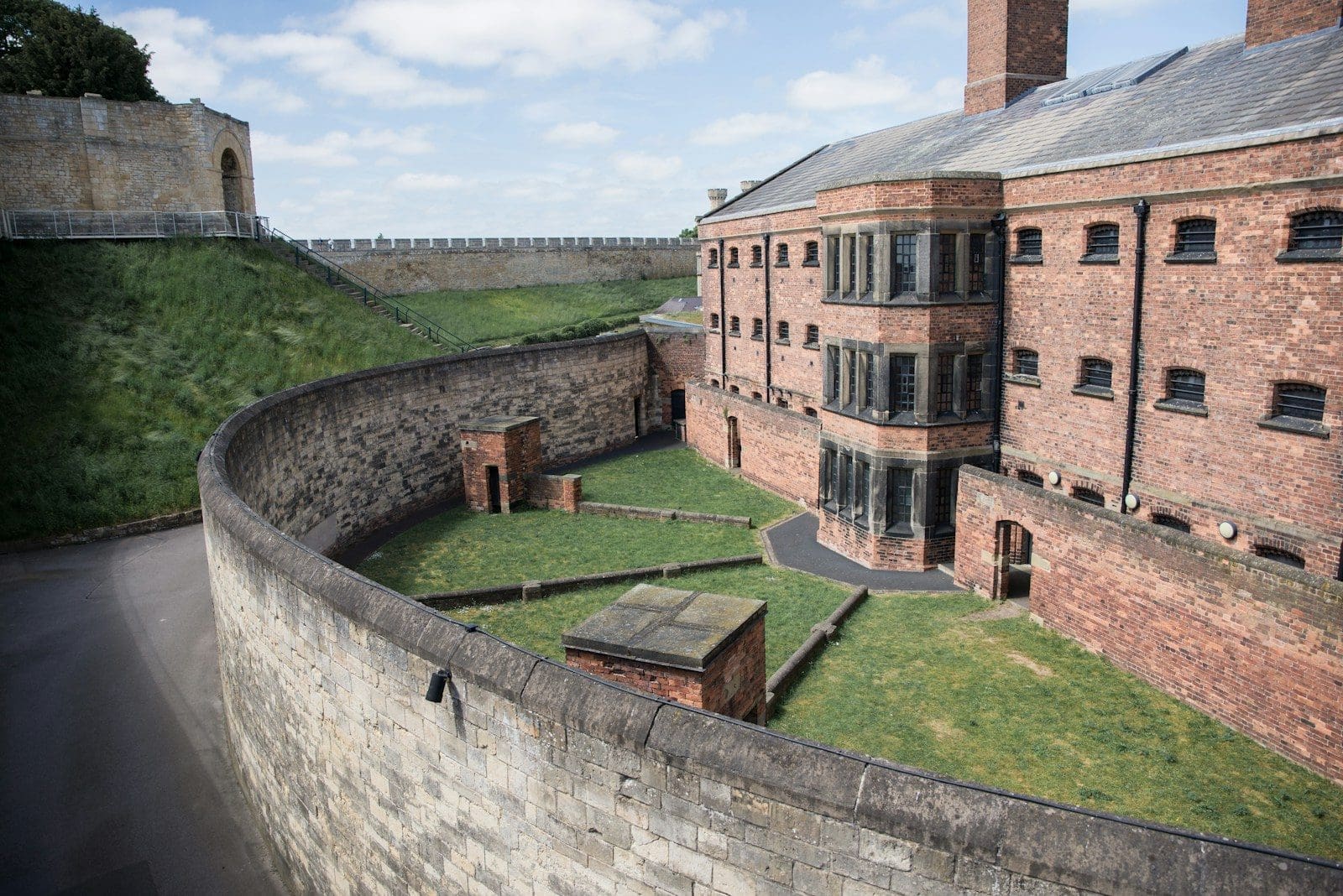
This part of the castle feels very different. The walls become less grand and more uncomfortable. Here, we move from kings and charters to crime, punishment, and the daily lives of people who were not having a nice heritage day out.
The prison cells are restored, and the stories give a sense of how harsh prison life could be. It is not cheerful. Nor should it be.
The separate system, used in Victorian prisons, aimed to keep prisoners apart from one another. Even chapel attendance could be arranged so inmates could not properly see each other. It was order taken to a rather grim extreme. The Victorians did like a system. Sometimes, too much.
For families, this part can be useful. It adds texture. Children may arrive for towers and views, but the prison gives them a clearer sense that history happened to ordinary people too. Not just kings, bishops, and people with very large hats.
The Castle Grounds Are Worth Time Too
Not everything at Lincoln Castle needs a ticket or a deep historical mood.
The castle grounds are a pleasant place to slow down. You can sit, look at the walls, let children move about, and pretend you planned the day at this relaxed pace all along.
It is a good picnic spot when the weather behaves. This being Britain, we should not build a whole life around that hope. But on a clear day, it works beautifully.
The grounds also help if you are visiting with people who enjoy history in different amounts. Some want every date and detail. Some want a nice wall and then lunch. Lincoln Castle handles both without judging either party, which is more than can be said for most group outings.
Pair It With the Cathedral
Lincoln Castle and Lincoln Cathedral belong together.
You can visit one without the other, but it feels a bit like reading only the middle chapter of a book. The castle gives us force. The cathedral gives us height, beauty, and ambition. Together, they explain Lincoln better than any slogan could.
The area around them is also one of Lincoln’s best places to wander. Bailgate has independent shops, cafés, pubs, and the kind of streets that make people say “character” when they really mean “uneven paving”.
The Lincoln Cathedral and Steep Hill route is nearby too. It is famous for being steep. The clue is there, to be fair. Walk down it with joy. Walk up it with humility.
Is Lincoln Castle Worth Visiting?
Yes. Very much.
It works for history lovers, families, walkers, day-trippers, and anyone who enjoys a good view with their learning. It is not a niche attraction. It has enough variety to hold attention without feeling scattered.
You can make it the main part of a Lincoln day out, or pair it with the cathedral and old town for a fuller visit. Either way, it earns its time.
If you only want a quick wander, the grounds and outside views still give you a sense of the place. But the full visit, with the wall walk, prison, and Magna Carta, is where the castle really opens up.
Best Tips for Visiting
Wear comfortable shoes. The castle is old, the hill is real, and Lincoln has not been flattened for our convenience.
Check the official Lincoln Castle visitor information before travelling, especially in winter or during repair work. Historic places do have a habit of needing maintenance. After nearly a thousand years, we can probably allow them that.
Give yourself more time than you think. Lincoln Castle is not just one room and a gift shop. It is a place to move through slowly.
And leave time for the view.
That is the bit that stays with you.
A Stronghold That Still Has Its Grip
Lincoln Castle is not just an old building. It is a working memory of power, punishment, law, and civic pride.
It has Norman walls, Victorian cells, a world-famous charter, and a view that makes the climb worth it. That is a strong mix.
It does not need gimmicks. It has had nearly a thousand years to practise being interesting.
Rather annoyingly, it is still very good at it.
If Lincoln Castle is part of a wider historic break, this practical England trip-planning guide can help you fit major heritage stops into a route without spending half the holiday in transit.