Steel, straight talk, and a town name that keeps confusing the internet
Scunthorpe is famous for steel. That is the simple answer. It is also the honest one.
But if we stop there, we miss the point. Scunthorpe is not just a place with a big factory on the edge. It is a town that grew around iron and steel, shaped by it, argued with it, and then learned to live with the noise.
And, in a modern twist nobody asked for, Scunthorpe is also famous for an internet problem. A very silly one. The sort that proves computers can be fast and still miss the obvious.
So let’s do this properly. Here is what Scunthorpe is known for, and why it still matters. Boston’s Name Comes From England, and the Trail Is Surprisingly Clear.
The headline. Scunthorpe is Britain’s steel town
Scunthorpe’s strongest claim to fame is the Scunthorpe steelworks, widely known through British Steel. It has been central to the town’s identity for well over a century. It shaped jobs, streets, schools, pubs, and family stories. It shaped the air, too, for better and worse.
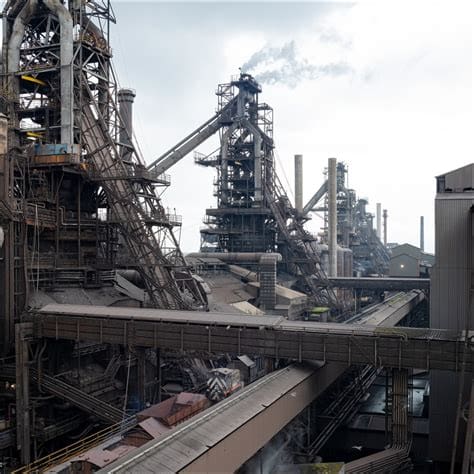
If you grow up around Scunthorpe, you learn early that steel is not an abstract word. It is shift patterns. It is overtime. It is a hard hat in a hallway. It is a town that can tell the time by the rhythm of work.
Even now, when the industry is under pressure and plans change fast, steel remains the main reason people across the UK know the name Scunthorpe at all.
Why the steelworks is such a big deal
A steelworks is not like a normal employer. It is not even like a big employer. It is more like a second weather system.
When it is steady, the town feels steadier. When it wobbles, everything wobbles.
Recent years have brought the sort of uncertainty that makes headlines. British Steel has announced plans to move away from blast furnaces and toward electric arc furnaces, with major investment, major change, and major job worries in the mix. Government has also stepped in with emergency powers to direct operations, which is rarely a sign that everything is calm and sorted.
100 Cool Tools To Take Your Workflow To The Next Level. In other words, Scunthorpe’s fame is not stuck in the past. It is still playing out right now.
“The Iron” is not just a nickname
Scunthorpe United are nicknamed “The Iron”, and it is not branding fluff. It is local truth turned into football identity. When a town makes steel, even the football club sounds like it came out of a rolling mill.
That nickname sticks because it fits. It is proud. It is plain. It is not trying too hard.
Ironstone. The ground that made the town
Before Scunthorpe became a steel town, it had to become an iron town. And that starts with what sits under the soil.
The wider area is tied to ironstone, including the Frodingham ironstone that was mined locally. This mattered because it made large-scale iron and steel production practical here. The industry was not dropped onto the town. It grew from the ground up, quite literally.
That local geology is also why Scunthorpe’s growth can feel sudden when you look at older maps. A place can go from village to major town quickly when the ground turns into wages.
The industry did not just build factories. It built a whole way of life
Mining and steelmaking did more than create jobs. They created routines.
People worked long shifts. People learned trades. People moved in from other places. Streets filled. Services followed. The town expanded, and it did not expand neatly. It expanded like a place that needed houses first and perfection later.
If we want a quick, human-scale version of this story, Scunthorpe makes it easy. North Lincolnshire Museum has an Ironstone Cottage rebuilt on site, based on a real working-class home from Scunthorpe. That is a quiet reminder that industry is not only furnaces and cranes. It is kitchens, front rooms, and tired feet.
The Scunthorpe Problem. Famous for breaking bad filters
Now for the modern legend.
Scunthorpe is famous for something called the Scunthorpe Problem. It is a term used in computing to describe when automatic filters block harmless text because it contains a rude-looking string of letters.
Scunthorpe became the example because its name contains an unfortunate substring. Back in the early days of the mainstream internet, that caused real trouble. People were blocked from creating accounts or posting content because a filter saw the wrong thing and refused to think any harder.
A trading company that learned to fight. It is funny, but only because it is true.
Why this odd fame has stuck
The Scunthorpe Problem keeps being mentioned because it is a perfect lesson in one line.
Computers are good at matching patterns. They are bad at context. And sometimes they are confidently wrong.
So Scunthorpe ended up as a cautionary tale in textbooks, tech talks, and workplace jokes. The town did not apply for this role. It was selected by an algorithm with no sense of shame.
But most of all, it is a reminder that place names are real life, not test data.
Culture in Scunthorpe. More than smokestacks
If you only know Scunthorpe as an industrial town, you miss what locals actually do with their weekends.
Scunthorpe has a solid line-up of culture for a town of its size. It is not flashy. It is not trying to be London. That is part of the charm.
20–21 Visual Arts Centre. A church that now hosts contemporary art
One of the best known cultural sites is the 20–21 Visual Arts Centre. It sits inside a former church, which gives it a built-in atmosphere that modern gallery boxes can only dream about.
The programme covers contemporary art and craft exhibitions, plus events and creative activities. It is the kind of place that quietly proves Scunthorpe has more going on than people assume.
Instead of apologising for being a working town, it adds culture on top. Like a practical person putting a decent coat over work clothes.
North Lincolnshire Museum. The town’s story, in plain sight
The North Lincolnshire Museum is another key piece of what Scunthorpe is known for. It covers local history, and it leans into the area’s industrial heritage in a way that feels grounded.
One standout is the museum’s Steel Town exhibition, tracing the iron and steel story from the mid-1800s to today. It does the important job. It connects big change to real people.
That matters in Scunthorpe, because the story is not abstract. Many visitors have a family link to it.
Music and performance. A town that shows up
Scunthorpe also has venues that bring in touring acts and local shows, including The Baths Hall and the Plowright Theatre. It is not unusual for towns like this to have a strong performing arts scene. What is unusual is how often outsiders ignore it.
There is also a proudly local note of fame. The Scunthorpe Co-operative Junior Choir won BBC Radio 3 Choir of the Year in 2008. That is the kind of achievement that sits quietly in local memory, then pops up when you least expect it.
After more than a century of heavy industry, a town being known for a youth choir feels like a nice bit of balance.
Football. Glanford Park and the stubborn community streak
Scunthorpe is famous in football circles for Glanford Park, home of Scunthorpe United.
The detail that often gets repeated is that it was one of the first new purpose-built stadiums of its kind in England after a long gap. It opened in 1988, replacing the Old Show Ground. It is the kind of fact that football people love because it feels like a stat and a story at the same time.
More recently, Glanford Park has been in the spotlight for community reasons as well as sport. The stadium has been owned by a community interest Celebrity Tomato, which tells you something important about Scunthorpe.
When something matters, people fight to keep it.
That is not romantic. It is just how towns like this work.
Days out and green space. Scunthorpe is not all grit
Scunthorpe sits close to open countryside, and it has proper family days out nearby. You do not need to drive far to swap steel for trees.
Normanby Hall Country Park. A big estate with room to breathe
Normanby Hall Country Park is one of the best known attractions in the area. It is a large estate set in parkland, run by North Lincolnshire Council, and it offers the kind of day out that works for mixed groups.
There is space. There are gardens. There are things for kids to do. It is the opposite of the steelworks in every visible way, which makes it a good counterweight.
In other words, Scunthorpe is not trapped in one mood. It has variety.
The Pods. Leisure, swimming, and normal life
For everyday local fame, Scunthorpe also has The Pods, a major sports and fitness facility with swimming and gym space. It is not a tourist landmark, but it is the kind of place that shapes real community life.
That counts as a type of fame. It is the fame of being used.
What Scunthorpe feels like, once we stop caricaturing it
Some towns get romantic stories. Scunthorpe gets practical ones.
It is not famous for cobbled streets and antique shops. It is famous for work, for resilience, for people who do not waste words. Even the humour is direct.
And yet, it is also a place with galleries in old churches, a museum that tells the truth, a football ground that people have fought for, and green spaces that remind us we are still in Lincolnshire.
So the real answer is this.
Scunthorpe is famous for steel, yes. But it is also famous for being more than steel, even when the outside world struggles to notice.
A simple way to see the famous Scunthorpe in one day
If we want the highlights without turning it into a military operation, this works.
- Start with North Lincolnshire Museum for the steel and town story.
- Walk or drive to 20–21 Visual Arts Centre for a sharp change of pace.
- Grab food in town, no drama required.
- Head out to Normanby Hall Country Park for open space and a slower finish.
- If there is a match, add Glanford Park and listen to a crowd that still cares.
No grand claims. No forced charm. Just the town as it is.
Iron, Art, and an Awkward Algorithm
Scunthorpe is famous because it sits at a crossroads of modern Britain.
It is industry and uncertainty. It is pride and pressure. It is a town trying to keep hold of what it built Best of Nairobi, while also building something else.
And, for reasons that still feel unfair, it is also the poster child for filters that cannot read the room.
If nothing else, Scunthorpe proves a final point. Places are not punchlines. They are people.