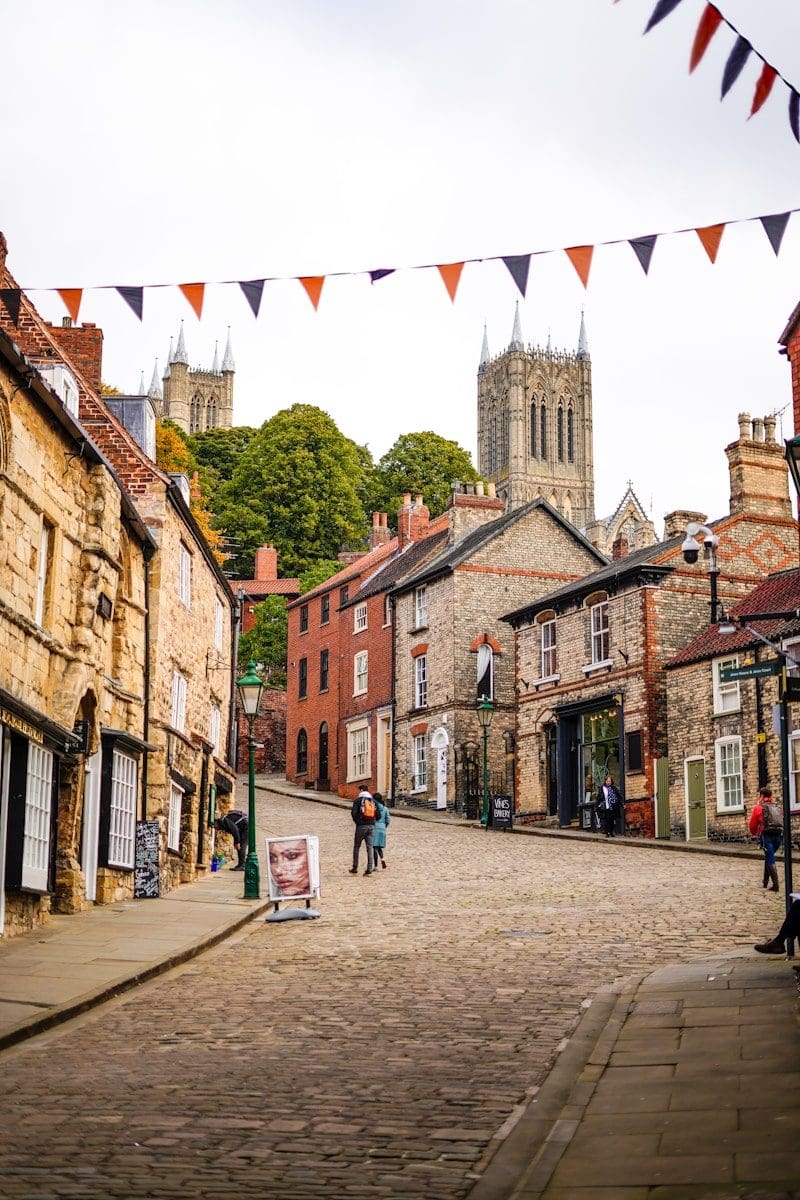
The Viking Way is turning 50 in 2026, which is a fine age for a long-distance path. Old enough to have earned respect. Young enough not to need a plaque, a ribbon, and a speech from someone in a fleece.
It runs for 149 miles through Lincolnshire, Leicestershire, and Rutland. It starts near the Humber and heads south through the Lincolnshire Wolds, Lincoln, the limestone villages, and on towards Oakham. In other words, it does not rush. It has rather better manners than that.
For walkers, it is already a known thing. For runners, it may now be time to look again.
Because the current running boom is not only about city marathons, carbon-plated shoes, and posting splits online as if the nation has been waiting. More people are looking for slower miles, softer ground, and routes with a bit of meaning. The Viking Way offers all three.
And it does it without shouting.
Why the Viking Way Fits 2026 So Well
The timing is useful. Running is popular again, but many of us are also tired of running that feels like homework.
We have watches that judge us. Apps that nudge us. Training plans that whisper dark things about “threshold sessions”. Helpful, yes. Relaxing, not always.
The Viking Way offers another option. You can run a stretch. Walk a stretch. Stop in a village. Look at a church. Take a photograph of a view that looks flat until it suddenly is not. Then carry on.
That is the appeal.
It is not a race route in the neat, closed-road sense. It is a long trail with history underfoot. It crosses Wolds, valleys, field edges, old tracks, market towns, and quiet lanes. It asks you to pay attention. A bold request, these days.
For Sleaford and the wider Lincolnshire running crowd, it also sits close enough to feel possible. We are not talking about a mountain expedition. No ice axe. No heroic beard required. Just decent shoes, a route plan, and the sense not to confuse “adventure” with “getting lost near dusk with 7% phone battery”.
A Trail With a Long Memory
The Viking Way opened in 1976. Its name nods to the Norse influence across eastern England. That gives the route a stronger story than “path through nice places”, which is helpful because Britain has no shortage of paths through nice places.
This one has layers.
It moves through a county shaped by settlement, farming, trade, church life, and weather. Lots of weather. The kind that starts as “fresh” and becomes “character-building” ten minutes later.
The northern stretch takes in the Lincolnshire Wolds, now known as a National Landscape. This is one of the county’s best outdoor assets. It is not dramatic in the Lake District way. It will not hurl cliffs at you or demand poetry. Instead, it gives you rolling chalk hills, wide skies, dry valleys, old lanes, woods, ridges, and villages that look as if they have had enough of nonsense since about 1420.
That is Lincolnshire at its best.
Quiet. Useful. Understated. Slightly suspicious of fuss.
Why Runners Should Care
Trail running does not have to mean mountains. This is worth saying, because social media can make it look as if every trail run requires a sunrise ridge, a drone, and someone called Luca standing on a peak in very small shorts.
Here in Lincolnshire, trail running is different.
It is field paths. Bridleways. Chalk tracks. Farm edges. Old railway lines, including routes around Woodhall Spa and the Spa Trail. Woodland. A gate that may or may not open the first time. Mud with ambitions. Wind that has clearly not read the forecast.
That may sound less glamorous. It is also more useful for real life.
The Viking Way gives runners a way to build strong, steady miles without the harsh repeat pattern of tarmac. It invites slower effort. It rewards patience. You can work on endurance without staring at your watch every 14 seconds like it owes you money.
And because the route can be broken into smaller sections, you do not need to tackle the whole thing. Most of us have jobs, families, dogs, knees, and washing machines with an urgent personal agenda. A full 149-mile adventure is lovely. A 5-mile out-and-back can be lovely too.
Best Ways to Use the Viking Way as a Runner
The smartest way to start is simple. Pick a short section and treat it as a discovery run.
Do not race it.
Not the first time.
Use the first visit to learn the ground. Notice where the path narrows. Notice where the surface changes. Notice where the wind appears from nowhere, as if Lincolnshire County Council ordered it in bulk.
A good Viking Way run might look like this:
Start with 30 to 45 minutes at easy pace. Keep the effort light. Walk the steeper or rougher parts. Take mental notes. Then, next time, extend the route or add a little steady effort in the middle.
That is how trail fitness builds.
Not through drama. Through repetition.
And, very annoyingly, through patience.
Walking Counts Too
This matters. Walking is not a failed run. It is not running’s less impressive cousin. On long routes, walking is often the thing that keeps you moving well.
The Viking Way is ideal for run-walk days. You can jog the flatter lanes, walk the climbs, pause at viewpoints, and still finish feeling as if you have done something worthwhile.
This also makes the route friendly for mixed groups. Faster runners can loop back. Newer runners can keep moving without pressure. Walkers can join in without feeling they have gate-crashed a fitness cult.
That is good club culture.
A route like this should not be reserved for the fast. It belongs to the steady, the curious, the returning runner, the nervous beginner, and the person who says, “I’ll just come for the short bit,” then enjoys it more than expected.
What to Wear and Carry
You do not need a kit cupboard that looks like a fell-running shop exploded.
But you do need to be sensible.
Trail shoes are useful when the ground is wet, rutted, or muddy. In summer, road-to-trail shoes may be enough on drier sections. In winter, grip matters more. So does warmth. So does not wearing white socks unless you enjoy tragedy.
Carry water on longer runs. Take a snack if you will be out for more than an hour. Bring a charged phone. Use a route map or GPX file. Tell someone where you are going if you are heading out alone.
This is not because the Viking Way is wild and dangerous. It is because even gentle countryside becomes less charming when you take the wrong footpath and end up negotiating with a field of cows.
They usually win.
The Lincolnshire Wolds: The Star Section
For many runners, the Wolds will be the best introduction.
They give enough rise and fall to feel interesting. They also offer views that remind you Lincolnshire is not all flat, despite what people from elsewhere keep saying with the confidence of the poorly informed.
The Wolds have a soft, open feel. The hills roll rather than loom. The villages are small and handsome. The lanes are quiet. The sky does a lot of the work.
For runners, that mix is ideal. You can build strength on gentle climbs, practise descending on softer paths, and enjoy the sort of scenery that makes an easy run feel like an outing.
That is the key word.
Outing.
Not session. Not sufferfest. Not “earning” lunch. Just going out and moving through a place.
A radical idea, apparently. For a shorter woodland outing, our Chambers Farm Wood trails make an easy local alternative.
Why This Is Good for Local Running Clubs
The Viking Way’s 50th anniversary is a gift for clubs across Lincolnshire.
It gives us a theme for social runs. It gives beginners a reason to try trails. It gives experienced runners a local challenge without needing a long drive. It gives walkers and runners common ground, which is rare and useful.
A club could run one section a month. Or choose a few accessible loops. Or organise a summer evening jog and walk. Or build a relay-style challenge across the year.
None of this has to be complicated.
The best club events often are not. Meet somewhere sensible. Run somewhere pleasant. Make sure no one is left behind. Finish with tea, chips, or a bun of some kind. Britain has survived on weaker plans.
A Better Kind of Challenge
The great thing about the Viking Way is that it does not insist on one version of success.
Some will want to complete the full trail in stages. Some will run a section and call it done. Some will walk it over weekends. Some will use it for marathon training. Some will go once, get muddy, complain politely, and secretly enjoy it.
All of these count.
That is why the route feels right for now. We need more outdoor goals that do not depend on speed alone. We need places that invite effort but do not demand performance. We need routes that remind us running can be about where we are, not only how fast we moved through it.
The Viking Way does that rather well.
How to Make the Most of the Anniversary Year
If you want to mark the 50th year, keep it simple. The Lincolnshire County Council Viking Way anniversary guide gives the official local context.
Choose a stretch near you. Go with one friend or a small group. Start easy. Read a little about the route before you go. Notice the old settlements, the churches, the tracks, the views, and the place names. Let the history add weight to the miles.
Then go back another day and do a different stretch.
That is how a long trail becomes part of your life. Not all at once. Bit by bit.
And if you are near Sleaford, the wider county is close enough to make this feel like a local project rather than a grand national expedition. We do not always need to leave Lincolnshire to find something worth doing.
A shocking thought. Best whispered.
One Path, Plenty of Reasons
The Viking Way at 50 is not just a heritage anniversary. It is a useful reminder.
We have a long, varied, story-rich route running through one of England’s most quietly rewarding counties. It suits runners, walkers, clubs, families, and anyone who wants more from a weekend than another lap of the same estate roads.
The trail is not flashy. That is part of its strength.
It offers distance without drama. History without costume. Challenge without chest-beating. Views without the need to pretend we are in the Alps.
In other words, it is very Lincolnshire.
And in 2026, that may be exactly what we need.
Soft Paths, Big Skies, Good Sense
The Viking Way has lasted 50 years because it does something simple very well. It links places. It carries stories. It gives us room to move.
For runners, that is more than enough.
We can chase times anywhere. We can stare at data anywhere. We can turn a hobby into a spreadsheet anywhere.
But a route like this gives us something better. A reason to slow down, look up, and remember that the best miles are not always the fastest ones.
Sometimes they are the ones with mud on the shoes, wind in the face, and a proper Lincolnshire sky overhead.
Anyone planning to run or fast-walk parts of the Viking Way may also find this practical guide to choosing between hiking shoes and trail runners useful, especially where surfaces change from firm paths to mud, roots and rougher ground.