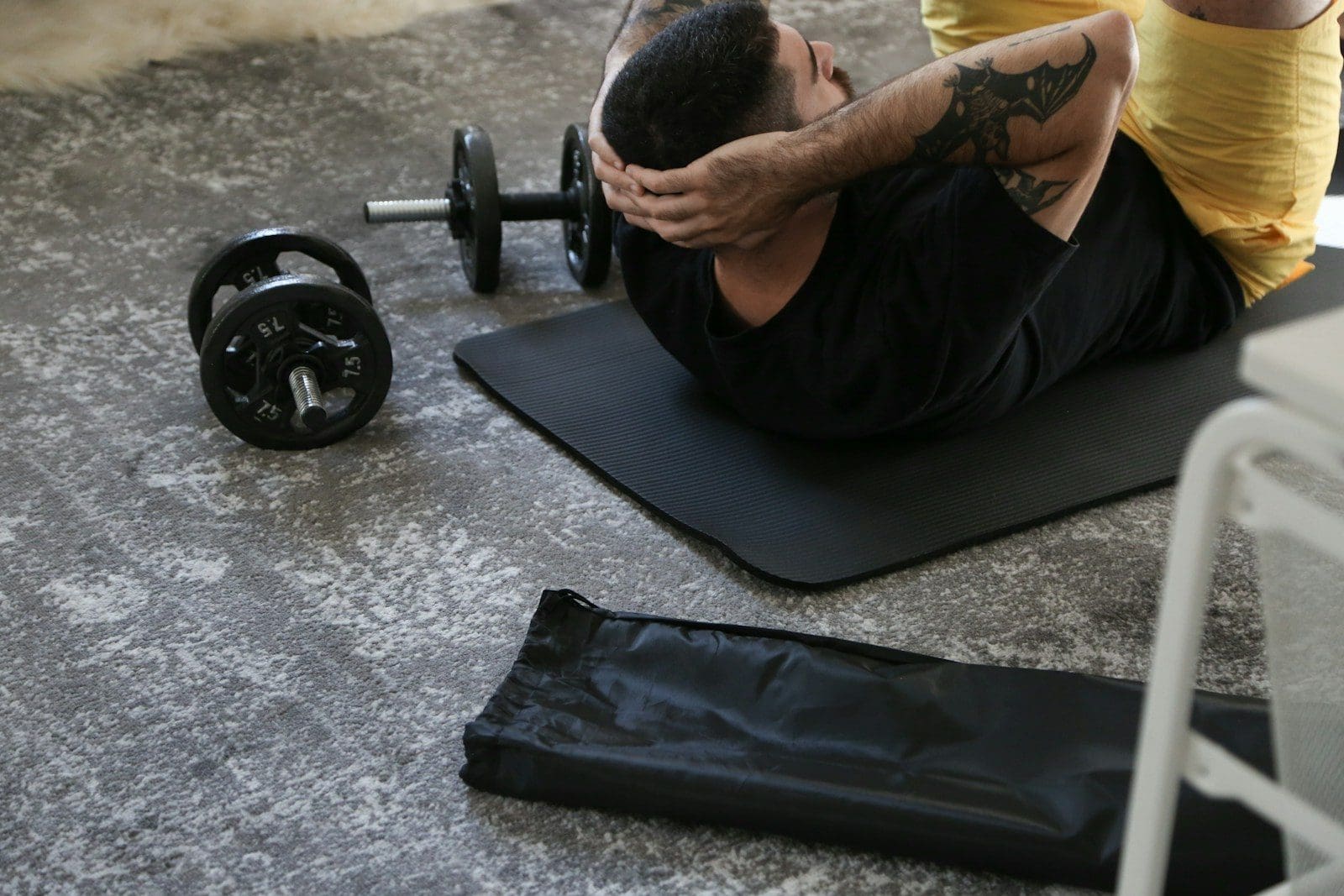
Strength training for runners at home can help you support stronger, more durable running, whether you are new to running or already have a drawer full of event T-shirts. This guide takes a practical UK approach, with advice that fits Sleaford and the surrounding Lincolnshire countryside.
There is no need to make strength training for runners at home complicated. We need a clear aim, a few useful habits and enough patience to let fitness build. The rest is mostly noise, often sold in an expensive bottle.
Strength training does not require a mirrored gym or a rack of equipment with mysterious handles. A small clear space and a few well-chosen movements can do useful work.
But most of all, we want progress that lasts. One heroic week followed by three tired ones is not a training plan.
Why runners benefit from strength work
First, stronger calves, hips and thighs help the body manage repeated landing forces This matters because steady training should leave you able to manage the rest of your day, not merely admire the stairs from a safe distance.
There is also a quieter benefit. single-leg exercises expose balance and control differences that ordinary running may hide This matters because steady training should leave you able to manage the rest of your day, not merely admire the stairs from a safe distance.
Just as important, regular resistance work can support performance and general health, especially as we think about running after 50 This matters because steady training should leave you able to manage the rest of your day, not merely admire the stairs from a safe distance.
For local runners, a short home routine is easier to repeat than a complicated session that requires a separate expedition This matters because steady training should leave you able to manage the rest of your day, not merely admire the stairs from a safe distance.
How to make home strength effective
Use good movement before heavy load
Control, range and stable alignment matter more than rushing to difficult variations. The NHS strength exercises are a useful starting reference for simple home movements.
Try this: Start with body weight and add resistance only when repetitions stay tidy. Notice how your body responds the next morning. That often tells us more than the watch did during the run.
Train both legs and one leg
Squats build general strength, while split squats and step-ups reflect the single-leg nature of running.
Try this: Include at least one movement from each type. Adjust for weather, daylight and the surface underfoot. The plan serves you; you do not serve the plan.
Do not forget the calves
Calves work through every stride and often need both straight-knee and bent-knee loading.
Try this: Use slow calf raises and progress from two legs to one. Keep the effort controlled. You should finish feeling that another few minutes would have been possible.
Strengthen the hips and trunk
Stable hips and a controlled trunk help transfer force while running.
Try this: Use bridges, side steps, dead bugs or side planks with calm breathing. Give the change time to work. Fitness improves through repetition, not through one unusually brave afternoon.
Progress gradually
More repetitions, slower tempo, greater range or extra load can all create progress.
Try this: Change one variable at a time and allow soreness to settle. Our guide to recovery after a long run is useful when strength work sits beside a demanding running week. Make the action easy to repeat. A modest habit done each week is more useful than a perfect habit done once.
Fitting strength around a running week
Home sessions work well on a non-running day or after an easy run when you are already warm Country lanes can be peaceful, but they are still roads. Visibility and awareness matter more than shaving a few seconds from a split.
Avoid a new heavy leg session just before a long run, race or demanding club workout. This becomes especially important during marathon training from Sleaford Mud, frost and standing water are not moral tests. Change the route when the surface makes the session needlessly risky.
In dark winter weeks, strength can replace a risky outdoor session without becoming wasted training A loop close to home also makes it easier to stop or shorten the session without turning it into an expedition.
A twenty-minute routine completed regularly is more useful than an hour-long plan that lives mainly in a notebook On open ground, the wind can change the effort more than the map suggests. Pace should move; effort can stay steady.
A two-session home routine
- Warm-up: March, squat gently and move the ankles and hips for five minutes Use easy effort unless the step clearly says otherwise.
- Lower body: Complete squats and split squats for two controlled sets Leave room to swap days when work or weather intervenes.
- Posterior chain: Add glute bridges or a supported hip hinge A rest day is part of the plan, not evidence that the plan has failed.
- Calves: Perform straight-knee and bent-knee calf raises Finish with a few calm minutes rather than stopping in a heap.
- Trunk: Use a side plank and dead bug variation Review the week by consistency, not by one fast split.
- Progression: Repeat twice weekly and add difficulty only when form remains strong Write it down before the week becomes busy.
Strength mistakes runners make
Doing random exercises
One common error is changing the session every week before any movement can progress. A better choice: Keep a small routine for four to six weeks.
Training to collapse
Another trap is taking every set to failure and then expecting a quality run. A better choice: Finish most sets with a few good repetitions still possible.
Ignoring one side
It is also easy to fall into allowing the stronger leg to do most of the work. A better choice: Use controlled single-leg exercises and compare form.
Moving too quickly
A less obvious problem is bouncing through repetitions to finish sooner. A better choice: Use a slow lowering phase and stable position.
Adding load during pain
Finally, avoid assuming more resistance will repair an irritated area. A better choice: Reduce the movement and seek qualified advice for persistent pain.
Home strength checklist
- Clear non-slip floor
- Stable chair or step
- Controlled body-weight squat
- Single-leg exercise
- Calf work
- Hip or hamstring movement
- Trunk stability exercise
- Two sessions in the diary
You do not need every item for every run. The list is a prompt, not a packing exercise for the North Pole. Pick what matches the distance, route and conditions.
Strength training questions
How often should runners strength train?
Two sessions each week suit many adults, though one consistent session is a useful start.
Do I need weights?
No. Body weight, a backpack or resistance band can provide progress, but weights may make loading easier to measure.
Should I lift before or after running?
Pair strength with easy days when possible and protect important running sessions. The best timing depends on your week.
Will strength training make me bulky?
Typical runner-focused sessions are unlikely to create large muscle gain. They mainly support force, control and resilience.
A Stronger Stride at Home
Home strength should be simple enough to survive a busy week. Choose a handful of useful movements, repeat them and let gradual progress do the less glamorous work. The aim is not to win every training day. It is to keep enough good days together that running becomes easier, safer and more enjoyable.
Start with the next sensible step. Let the weeks do their work. Before long, local runners can look back and see that ordinary runs have built something rather useful.
If you want a little more context on why strength belongs beside running rather than competing with it, this guide to sports conditioning explains how strength, endurance, movement quality and recovery fit together in a balanced training week.