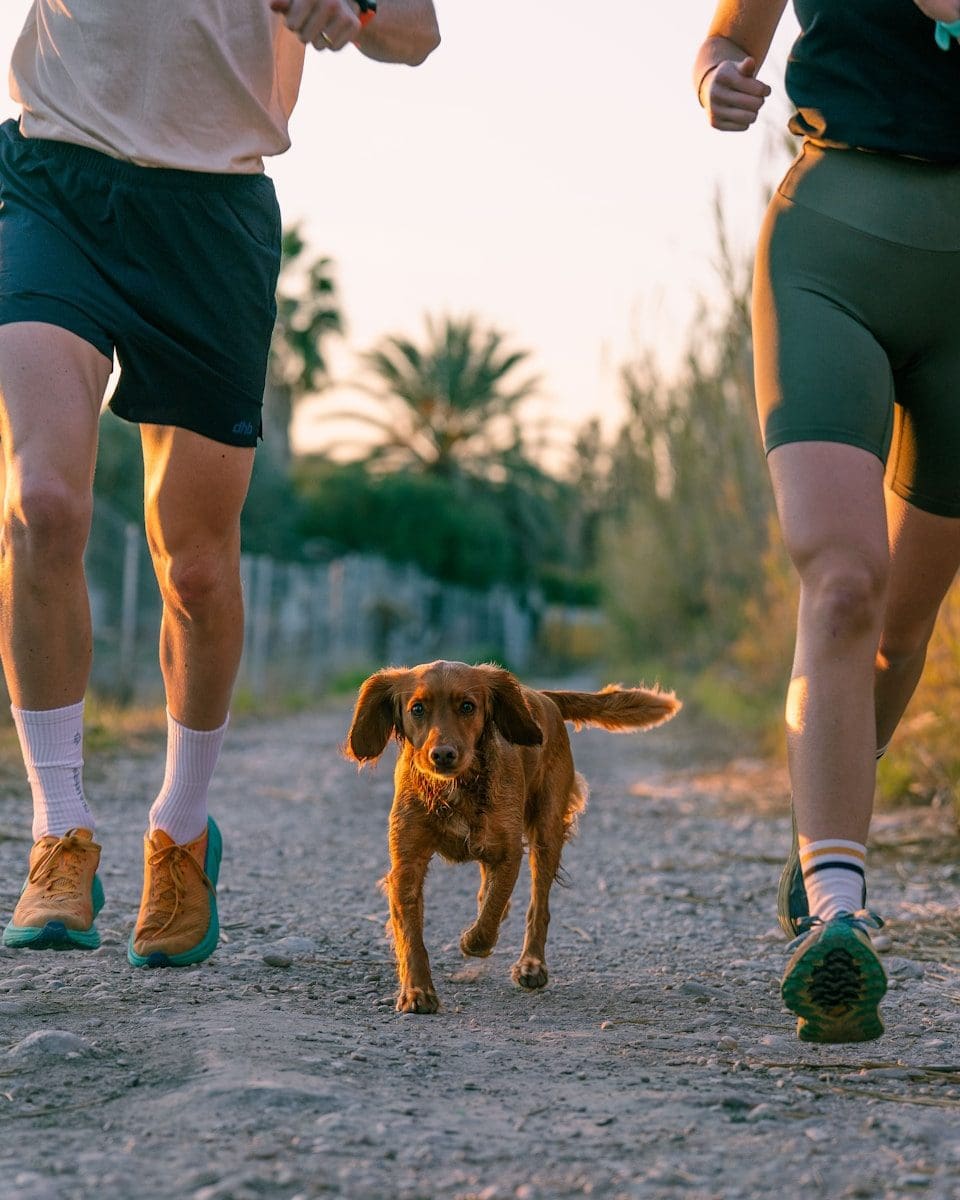
Running with a dog in lincolnshire can help you keep both runner and dog safe on local routes, whether you are new to running or already have a drawer full of event T-shirts. This guide takes a practical UK approach, with advice that fits Sleaford and the surrounding Lincolnshire countryside.
For many of us, running with a dog in Lincolnshire starts with good intent and a slightly optimistic idea of pace. That is normal. A better approach is calm, steady and easy to repeat.
A dog can be excellent running company. It can also stop without warning to inspect a hedge of immense strategic importance. The route therefore belongs to two athletes, only one of whom has read the plan.
Instead of chasing perfect sessions, we can build a routine that works in normal British weather and normal British life.
Why dog running needs shared preparation
First, dogs need gradual fitness just as people do, with age, breed, health and surface all affecting suitability This matters because steady training should leave you able to manage the rest of your day, not merely admire the stairs from a safe distance.
There is also a quieter benefit. livestock, wildlife and other path users require reliable control and responsible lead use This matters because steady training should leave you able to manage the rest of your day, not merely admire the stairs from a safe distance.
Just as important, heat affects dogs differently and can make a mild human running day unsafe for an animal This matters because steady training should leave you able to manage the rest of your day, not merely admire the stairs from a safe distance.
For local runners, roads, gates and narrow paths create handling problems that should be practised before longer runs This matters because steady training should leave you able to manage the rest of your day, not merely admire the stairs from a safe distance.
Prepare your dog for running
Check health and maturity
Puppies, older dogs and animals with medical or breathing issues may not be suitable for sustained running.
Try this: Ask a vet about the right age, distance and conditions for your dog. Notice how your body responds the next morning. That often tells us more than the watch did during the run.
Build distance slowly
Start with brisk walks and short jogging intervals so paws, muscles and behaviour can adapt.
Try this: Increase time in small steps and watch recovery later that day. Adjust for weather, daylight and the surface underfoot. The plan serves you; you do not serve the plan.
Use suitable equipment
A well-fitted harness and running lead can improve control, but the setup must suit the dog and route.
Try this: Practise walking and short runs before using it near roads or livestock. Keep the effort controlled. You should finish feeling that another few minutes would have been possible.
Keep control around livestock
Dogs should not chase or worry farm animals. Current law gives livestock stronger protection from dog attacks and disturbance.
Try this: Use a lead around livestock and follow signs, landowner instructions and the Countryside Code. Give the change time to work. Fitness improves through repetition, not through one unusually brave afternoon.
Protect against heat
Dogs cannot cool in the same way as people and hot ground can damage paws.
Try this: Run at cooler times, carry water when needed and stop for heavy panting or distress. Our guide to hydration for runners in UK weather can help you plan your own fluid needs alongside your dog’s. Make the action easy to repeat. A modest habit done each week is more useful than a perfect habit done once.
Dog-running routes in Lincolnshire
Field paths may cross grazing land, so check signs and be ready to shorten the lead before entering Country lanes can be peaceful, but they are still roads. Visibility and awareness matter more than shaving a few seconds from a split.
Narrow country lanes need close control because a dog moving sideways can reach traffic quickly Mud, frost and standing water are not moral tests. Change the route when the surface makes the session needlessly risky.
Muddy ground can hide sharp debris and increase paw wear, so check feet after the run A loop close to home also makes it easier to stop or shorten the session without turning it into an expedition.
Shared riverside and town paths require space, a polite pass and control near children, cyclists and other dogs. The River Slea Sunrise 10K is a useful local example of the kind of route where shared-path manners matter. On open ground, the wind can change the effort more than the map suggests. Pace should move; effort can stay steady.
A safe dog-run routine
- Before: Check weather, route, livestock risk and your dog’s health Write it down before the week becomes busy.
- Warm-up: Walk for ten minutes and allow a calm toilet stop Use easy effort unless the step clearly says otherwise.
- Main run: Use short easy intervals and keep the lead under control Leave room to swap days when work or weather intervenes.
- At gates: Slow down, communicate and prevent tangling A rest day is part of the plan, not evidence that the plan has failed.
- Finish: Walk, offer water and check paws Finish with a few calm minutes rather than stopping in a heap.
- Later: Watch for limping, unusual tiredness, vomiting or continued heavy panting Review the week by consistency, not by one fast split.
Dog-running mistakes
Starting with human mileage
One common error is taking an untrained dog on the full normal route. A better choice: Build the dog’s time gradually from walking.
Using a long loose lead near roads
Another trap is allowing sudden movement into traffic or around other people. A better choice: Shorten the lead and slow to a walk.
Running in heat
It is also easy to fall into assuming the dog is comfortable because the runner is. A better choice: Use cool conditions and stop early.
Ignoring livestock signs
A less obvious problem is treating a public path as freedom to let the dog roam. A better choice: Keep close control and use a lead where required or sensible.
Missing paw checks
Finally, avoid overlooking cuts, grit, grass seeds or worn pads. A better choice: Inspect and clean paws after rough or muddy routes.
Dog-running checklist
- Vet-approved suitability
- Well-fitted harness
- Controllable lead
- Cool forecast
- Water when needed
- Livestock-aware route
- Paw check
- Dog identification details
You do not need every item for every run. The list is a prompt, not a packing exercise for the North Pole. Pick what matches the distance, route and conditions.
Running-with-a-dog questions
How far can my dog run?
It depends on breed, age, health, training and weather. A vet can give individual advice, and distance should build gradually. Longer outings also make your own post-run recovery more important.
Should my dog be on a lead near livestock?
Yes. Keep dogs under close control and use a lead around livestock, following signs and the Countryside Code.
Can dogs run in warm weather?
Use great caution. Dogs can overheat quickly, and warm ground may burn paws. Choose cooler times or skip the run.
Is a waist lead safe?
It can be useful with suitable training and equipment, but sudden pulling affects balance. Practise in a quiet place first.
Four Paws, One Sensible Plan
The best dog runs are controlled, gradual and pleasantly uneventful. Leave enough attention for livestock, traffic and the next fascinating hedge. The aim is not to win every training day. It is to keep enough good days together that running becomes easier, safer and more enjoyable.
Start with the next sensible step. Let the weeks do their work. Before long, local runners can look back and see that ordinary runs have built something rather useful.
Good dog-running manners matter just as much as fitness, especially on shared paths, and this practical trail-etiquette guide covers leash control, wildlife, other users and the small habits that help everyone enjoy the route.