Scunthorpe is not a “Viking town” in the way York is a Viking town. It is not a surviving Viking city with walls, street plans, and a tidy museum trail that ends in a gift shop full of horned helmets.
But Scunthorpe does have Viking fingerprints. They are small. They are quiet. They are mostly in the name.
So the honest answer is this. Scunthorpe is a town with a Viking-age place-name, sitting in a part of England shaped by Scandinavian settlement. The modern town we know, though, is mainly an industrial creation that grew fast much later.
That sounds like a split decision. It is. Living in Scunthorpe: what it’s really like. England does that a lot.
What people usually mean by “Viking town”
When we say “Viking town”, we tend to picture a busy Norse center. We think of big places, strong markets, and stories that start with longships and end with a dramatic haircut.
That picture fits a few places in Britain. Most of them are not small inland settlements.
A lot of Viking impact in England is softer. It shows up in law, language, and everyday farming life. It also shows up in the map. That is where Scunthorpe comes in.
The clue hiding in plain sight: “-thorpe”
The biggest Viking hint is the ending.
“Thorpe” comes from Old Norse and points to a small settlement. Often it means an outlying farmstead or a secondary place linked to a bigger village nearby. In other words, it is the opposite of a grand Viking capital.
That matters because it changes the whole mood.
“Thorpe” is not a battle cry. It is a practical label. It is the sound of people trying to make a living on the edge of someone else’s land.
Scunthorpe in the Domesday world
Scunthorpe shows up in Domesday Book in 1086. That alone tells us it existed as a recognised settlement by the late 11th century.
Open Domesday summarises it as a settlement recorded in 1086, with 21 households noted, which puts it firmly on the medieval map rather than in the “later invention” category.
So Scunthorpe is old. Just not “stone hall and saga” old.
The name points to Scandinavian roots
Most explanations of the name trace it back to an Old Norse personal name paired with “þorp”.
The common reading is that it began as something like “Skuma’s þorp”, meaning Skuma’s outlying farm or homestead. You may also see early recorded spellings like “Escumesthorpe” connected with the Domesday record.
Oxford University Press material on British place-names also lists Scunthorpe among names described as completely Scandinavian in origin.
Alabama Hunters Education: The Key to a Safe and Rewarding Hunting Experience. All of that lines up with the “-thorpe” clue.
So the name is Viking-age in flavor, and likely in origin. That is not nothing. Names are stubborn. They stay put long after the people who coined them have turned into soil.
The wider setting: Scunthorpe sits in “Viking England”
Scunthorpe is in northern Lincolnshire, close to the Humber and the old routes that linked inland farms to river travel and trade.
This region sits inside what historians often call the Danelaw, the part of England shaped by Danish conquest and then long settlement from the late 9th century into the early medieval period. The Danelaw story is not just raids. It is law, landholding, and families who stayed.
Place-names are one of the clearest traces of that settlement. Endings like “-by” and “-thorpe” cluster in the areas where Scandinavian language and life took root.
So if we zoom out, Scunthorpe sits in a landscape with strong Scandinavian naming signals. That makes it very hard to argue the Vikings had no role at all.
The catch: a “thorpe” is not a Viking city
Here is where we keep our feet on the ground.
A “thorpe” tends to mean a smaller offshoot. It hints at growth around an older centre. In other words, the name itself suggests Scunthorpe began as an outlying place, not the main show.
Local industrial history writing also describes Scunthorpe as “Skuma’s Thorpe” and notes it was once a secondary settlement of the parish of Frodingham. That is the same “secondary place” idea, just written in a more modern voice.
So the name carries a Viking-era stamp, but it also quietly tells us Scunthorpe was not the big settlement in the area at the time.
If anyone hoped for a Viking royal hall under the High Street, they may want to sit down.
What the archaeology can and cannot prove
Archaeology in Danelaw areas can be frustrating. Not because nothing is there, but because daily life does not always come with a label saying “Made by Vikings”.
Objects, graves, and buildings can show Scandinavian links. But the lines blur fast once people mix, marry, trade, and share tools.
Local museums often bridge that gap by showing finds and giving the wider story. North Lincolnshire Council has promoted exhibitions and learning around Viking-age life and archaeology in the area, including displays built around the idea of Viking settlement in the Danelaw. The North Lincolnshire Museum itself frames the local story through archaeology, history, and landscape, which is where the Viking layer usually sits.
So yes, the region has material for a Viking chapter. Discovering Alabama Fossils. But no, that does not automatically make Scunthorpe a Viking “town” in the modern sense of a named urban centre.
Why Scunthorpe feels younger than it is
Scunthorpe’s biggest growth story is not Viking. It is iron.
Modern Scunthorpe developed through the exploitation of local ironstone in the 19th century, and then steel-making. That industrial rise pulled nearby villages into one growing town.
Local history summaries describe modern Scunthorpe as made up of several villages that expanded and merged, helped along by the geology beneath them.
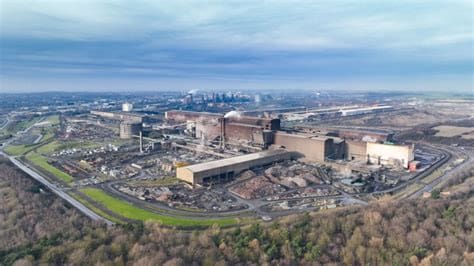
That is why the town’s identity feels tied to industry and work, not longships and runes. The skyline that sticks in the mind is steelworks, not a longhouse.
It is also why calling it a Viking town can feel off. The word “town” makes us picture what we can still see. Most of what we can still see is far more recent.
A better way to describe it
If we want accuracy without killing the fun, this wording holds up well.
- Scunthorpe has a Scandinavian place-name, with “-thorpe” from Old Norse.
- The settlement is recorded by 1086, which fits a post-Viking-conquest England where these names were already in use.
- The wider area sits within the historical Danelaw zone where Scandinavian settlement shaped language and local life.
- The modern town’s main growth and identity come from 19th-century iron and steel, not Viking urban life.
That gives us the full picture.
It also saves us from having to pretend the Parishes Centre was built by a Danish warlord with a vision for retail.
How to spot the Viking layer when you are in Scunthorpe
The Viking layer in Scunthorpe is mostly about pattern, not monuments.
Start with names. Scunthorpe itself is built from older areas and villages, and you can still see “-thorpe” in local place names around the town.
Then look wider across Lincolnshire and the Humber side. You see the Norse naming toolkit again and again, especially where settlement was strong.
After that, go indoors. Local museum displays and events often do the heavy lifting, because Viking life is easier to show through objects than through a street plan that got rebuilt twice and then surfaced with tarmac.
None of this needs fantasy. It just needs patience.
So, is Scunthorpe a Viking town
Lake Guntersville, Alabama: A Deep-Dive Guide From the Water and the Woods. Scunthorpe is Viking-linked, not Viking-defined.
The name is the headline. It points to Scandinavian language and settlement.
The location supports it. This is Danelaw country, where Scandinavian settlers left deep marks in speech and place-names.
But the town we recognize today rose on ironstone and steel. That story is much later, much louder, and much more visible.
So we can claim a Viking thread with a straight face. We just do not claim the whole jumper.
A Town with Two Timelines
Scunthorpe carries two histories at once. One is quiet and old, tucked into a name that began as an outlying farm. The other is modern and bold, forged in iron and built at speed.
If we hold both together, we get the best version of the place. Not a theme-park Viking town. Not a town with no past. Just Scunthorpe, doing what much of England does, which is layering new lives on top of old words.