When people say “Boston”, most minds sprint across the Atlantic. Fair enough. But Boston, Lincolnshire was here first. It does not have a baseball team. It does have something far more useful in the Fens.
A tower.
And not a shy one.
Boston is famous for a handful of things that keep turning up in the town’s history like a familiar face in a small pub. You see them in the skyline. You see them in the street plan. You feel them in the way the town still works.
Boston, England is it worth visiting. Here is what Boston, UK is known for, and why it matters.
Boston at a glance
Boston, Lincolnshire is best known for:
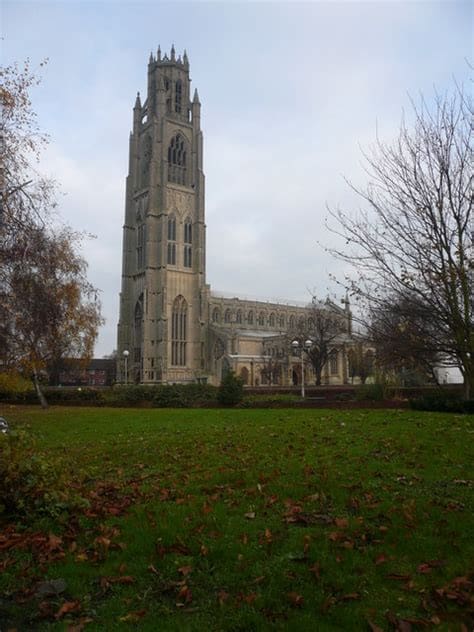
- St Botolph’s Church (“The Boston Stump”) – the landmark tower you can see for miles
- A proper market town – trading roots that still show up every week
- A medieval port – once rich from wool, cloth, and links to Europe
- Pilgrim and New England links – stories that feed into Boston, Massachusetts
- The Haven and drainage engineering – water, sluices, and the making of the Fens
- Maud Foster Windmill – a tall working windmill by the drain
- Heritage buildings – Guildhall, friary remains, and quiet old streets
- Big-sky nature nearby – marshes, birds, and flat horizons that go on forever
In other words, it is a town with a lot going on, even when it looks like it is having a day off.
The Boston Stump: the skyline that does the marketing for you
If Boston is famous for one thing, it is St Botolph’s Church. Locals call it the Boston Stump, which sounds rude until you see it. Then it feels accurate.
The tower rises up from flat land, so it looks even taller than it is. From the right spot, it can feel like the church is doing the whole job of “sense of place” on its own.
This is not a small parish church that got carried away. It is large, proud, and built with the confidence of a town that once had serious money. In medieval Lincolnshire, that confidence came from trade.
So the church is not just pretty. It is a clue.
Instead of thinking of the Stump as “a nice old church”, think of it as Boston’s historic headline. It tells you the town once mattered, loudly.
A market town that still behaves like one
Boston is also famous for its market. Not in the “artisan chutney” sense. In the older, more practical sense: people turning up, buying things, selling things, then going home with bags and gossip.
Market rights in Boston go back a long way. The town’s trading history is not a side story. It is the spine.
Even today, Boston Market still runs every week. That matters because it keeps the town centre doing something real. It is not just a backdrop. It is a working place.
2026 Money Reset That Feels Calm — Budget, Bills, Debt, and Savings. After more than seven centuries of market life, the routine is almost the point. You come for the church, but you stay because the town still has a pulse on market day.
A medieval port with European links (yes, really)
Boston’s fame is also tied to water and trade. The town sits on The Haven, a tidal river that connects it to The Wash and out to sea.
That link helped make Boston a major port in the Middle Ages. Wool and cloth moved through here. Merchants came and went. Money followed. Then stone followed, which helps explain the Stump again.
Boston was also connected to European trading networks, including links associated with the Hanseatic League. That sounds grand because it was. For a period, Boston was part of a wider world of ports, deals, and hard-nosed commerce.
But most of all, it explains why Boston has a “bigger than expected” feel when you look closely. The town was built for trade, not just for living.
Pilgrims, prisons, and the long shadow of New England
Boston, Lincolnshire is famous for its American connections. Not in a theme-park way. In a slightly awkward, historically messy way. Which is usually the real kind.
One key story sits in 1607, when a group of English Separatists tried to leave for the Netherlands from the coast near Boston. The attempt failed. People were arrested. Some were taken to Boston and held in the Guildhall cells.
So yes, Boston’s links to the “Pilgrim” story include a courtroom and a lock-up. Very on-brand for British history.
Later, New England links grow stronger through people, preaching, and migration. The Puritan minister John Cotton served at St Botolph’s in Boston before leaving for Massachusetts in the 1630s. That wider movement helps explain why the name “Boston” travelled, and why Boston, Massachusetts ended up with a Lincolnshire name.
It is not one neat origin story. It is a chain of places and people. In other words, it is history behaving normally.
The Guildhall: where civic life got done
Boston is also known for its Guildhall. It is one of those buildings that makes you slow down, even if you did not mean to.
This was a working civic building. It saw trade regulation, local power, legal decisions, and the kind of everyday authority that shaped people’s lives. It also holds that Pilgrim-related prison story, which gives it an extra edge.
If you like history that feels close, the Guildhall delivers. It is not royal. It is not distant. It is local, practical, and slightly stern.
The Haven, the Grand Sluice, and the Fens being engineered into existence
Boston’s fame is tied to water control. That sounds dull until you remember that much of this landscape exists as it does because people forced it to.
The Haven and the wider drainage system are part of how the Fens were shaped into productive land. Sluices, drains, and navigation works helped manage floods and move goods. They also changed the local economy. Farming expands. Transport routes shift. Towns rise or stall.
Boston sits right in that story.
AI at Work in 2026 — How We Stop “Workslop” and Get Real Time Back. So when you walk along the water, it is not just a “nice riverside”. It is the working edge of a landscape that had to be made, maintained, and defended against water that never fully agrees.
Maud Foster Windmill: a landmark that still earns its keep
Boston is famous for Maud Foster Windmill, a tall tower mill by the drain at Skirbeck. It is striking. It is also a reminder that food and trade were not abstract here.
The mill was built in the early 19th century, and it is still one of the best-known working windmills in the country. It fits Boston perfectly: practical, tall, and slightly dramatic against the flat land.
It also gives Boston another vertical landmark, which is helpful in a landscape where the horizon can feel like it starts at your feet.
Blackfriars and the quieter side of old Boston
Boston is not only towers and trade. It is also old stones tucked into side streets.
The town’s Blackfriars site is linked to the Dominican friars who once had a presence here. Parts of that past survive in buildings that have been adapted and reused over time.
That reuse is part of Boston’s character. It is not a museum town. It is a living town with history layered into it. Sometimes that history is proudly labelled. Sometimes it is just… there.
Big skies, birds, and the Boston area outdoors
Boston’s fame also comes from what sits around it. The wider area has classic Fenland and marsh landscapes, plus nature reserves that draw walkers and birders.
Nearby places like Frampton Marsh and Freiston Shore give you the wider Boston setting: tidal edges, open space, and wildlife. The scale is the point. The sky feels larger. The wind feels more honest.
If you want a Boston trip that feels different from the usual “market town day out”, pairing the town with a marsh walk does it. It also keeps things balanced: stone and story first, then open space and quiet.
What Boston feels like on a good day
Boston’s fame can sound very “heritage leaflet”. The reality is more ordinary, which is a compliment.
On a good day, Boston feels like:
- A town where people still use the centre
- A place where history is visible, not staged
- A skyline that makes you look up, even if you are not the type
- A market day that feels like a habit, not an event
- Water that explains both the town’s past and its daily life
Instead of chasing highlights like ticks on a list, it helps to treat Boston as a town you move through slowly. The best bits are often the ones you did not plan.
A simple way to see the “famous” Boston in one walk
If we want the famous Boston in a clean loop, this works:
- Start with St Botolph’s Church and the view around it
- Head into the centre and pick up the market streets
- Drop into the Guildhall area and the old civic core
- Walk along the water by The Haven and key bridges
- Finish at Maud Foster Windmill for the second skyline moment
Bank of America Winter Village at Bryant Park. It is not a long trek. It is also not a bad way to understand the town fast, without rushing.
Big Sky Proof
Boston, UK is famous because it punches above its weight. It has a landmark church tower that dominates flat land. It has a market tradition that never quite went away. It has a port history tied to Europe, and a migration story tied to America. Then it adds windmills, waterways, and marshes, as if one strong theme was not enough.
And yes, it is still Boston. Just the original one.