The Plowright Theatre sits on Laneham Street in Scunthorpe, a compact brick-fronted venue that has seen everything from Shakespeare and school concerts to touring comics and local am-dram. It is one of North Lincolnshire’s main live entertainment spaces and a core part of the town’s cultural spine, alongside The Baths Hall, 20-21 Visual Arts Centre and North Lincolnshire Museum.
A Civic Theatre With A New Name
The building opened in 1958 as the Scunthorpe Civic Theatre, commissioned by the old Scunthorpe Borough Council and built by J. W. Taylor. From the start it was a traditional proscenium-arch theatre: a single raked auditorium facing a framed stage, built for plays, variety, and occasional film screenings.
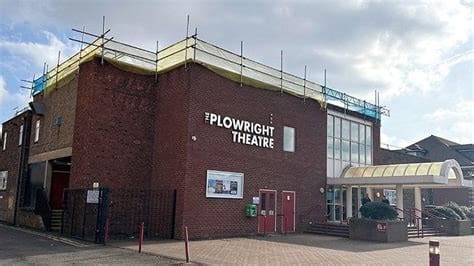
In the 1990s it was renovated, the foyer was extended, and the venue was re-named The Plowright Theatre in honour of Dame Joan Plowright. She was born in nearby Brigg, educated in Scunthorpe, and cut her teeth with the Scunthorpe Little Theatre Club, which staged the theatre’s first production, Peer Gynt, back in 1958.
Grimsby: From Roman Outpost to Fishing Powerhouse of the North Sea. So the new name is not branding for branding’s sake. It ties the building directly to a local actor who went on to a major stage and screen career, and to the grassroots drama club her father founded.
Size, Layout and Atmosphere
On paper, The Plowright is modest:
- Traditional proscenium theatre
- Around 330–354 seats, all on one raked level
- Intimate, single-auditorium layout
In practice, that scale is one of its strengths. You are never far from the stage, the sightlines are straightforward, and the whole place feels more like a large community living room than a distant West End house.
Inside, the auditorium carries classic late-1950s civic-theatre design: rows of red seats, simple plastered walls with arched recesses, and pendant lights giving a soft, even glow.
The backstage and technical areas have evolved over time. The original projection booth is now a permanent tech suite, reflecting the shift from film to live performance as the main business of the building.
What Happens On Stage
The Plowright is programmed as a mixed-use live venue. Across a typical year you can expect:
- Touring stand-up comedy and named comics on the UK circuit
- Pantomimes at Christmas, often with both family and adult-only versions
- Music – tribute shows, small tours, acoustic nights
- Dance school showcases and touring productions
- Amateur dramatics and musical theatre from local societies
Two long-standing groups, the Scunthorpe Musical Theatre Society and the Scunthorpe Gilbert and Sullivan Amateur Operatic Society, treat The Plowright as their home stage and put on a major show there each year.
The programming sits under the Scunthorpe Theatres umbrella, alongside The Baths Hall on Doncaster Road. The Baths takes the bigger, louder events; The Plowright deals in closer, more intimate nights where you can actually see the performers’ faces without binoculars.
Ownership, Management and Investment
The theatre is owned and run by North Lincolnshire Council, Impatiens Sunpatien Compact White which treats it as part of a wider cultural offer that also includes Normanby Hall, North Lincolnshire Museum and 20-21 Visual Arts Centre.
In 2021, proposals were taken forward to bring The Plowright and The Baths Hall back fully into council management, with a stronger emphasis on community use, local creativity and a steady programme of comedy, music and drama.
More recently, the council has funded essential fabric work. A 2025 report highlighted a £160,000 roof replacement, paid for via the UK Shared Prosperity Fund, after surveys showed that patch repairs were no longer enough and leaks risked damaging the auditorium and equipment.
It is the sort of unglamorous investment that keeps a “much-loved venue” open and dry, and it signals that, despite budget pressures, the theatre is still seen as worth looking after.
Audience Experience: Visiting The Plowright
The Plowright’s location puts it a short walk from Scunthorpe’s main shopping streets and within reach of several council-run car parks. Council guidance notes that there’s no dedicated customer parking on site, but local car parks are usually free after 6pm, which suits evening shows.
Inside, you meet the usual compact foyer:
- Box office and ticket collection
- Bar serving drinks before the show and in the interval
- Simple waiting area that can get lively when the house is full
Trip-review comments often describe the building as “nice and intimate”, with decent views from most seats and a relaxed, local feel. There is also candid feedback about comfort for larger patrons, which the community has discussed openly – a reminder that seat design from the 1950s does not always match modern body shapes and accessibility expectations.
For most visitors, though, the practical picture is straightforward: park nearby, pick up a drink, enjoy the show, and walk back to the car with the rest of the audience spilling onto Laneham Street.
Role in North Lincolnshire’s Cultural Life
On a map, The Plowright is just one more dot in Scunthorpe’s town centre. In day-to-day life, it pulls a lot of weight for a relatively small space.
It offers:
- A professional-level stage for local societies and schools
- A manageable, affordable venue for touring acts who don’t need an arena
- A central, accessible place where people from across North Lincolnshire can meet for a shared night out
Planning documents, cultural strategies and visiting-supporter guides all list it alongside the Baths Hall, the visual-arts centre and the museum as a key piece of the area’s “cultural and leisure assets”.
Mint; Mentha piperita Peppermint a town best known nationally for steel and industry, the theatre – like Normanby Hall and the museum – quietly broadens the story. It gives the area somewhere warm, lit and sociable on winter evenings, somewhere to see touring comics without driving to Leeds or Sheffield, and somewhere for local performers to step onto a real stage without leaving North Lincolnshire at all.
A Small Stage With Long Reach
The Plowright Theatre is not grand in the way of big city venues. Its auditorium is mid-century functional rather than ornate. Its bar is simple. Its foyer is compact.
Yet the building carries more than sixty years of local performance history, from the first Peer Gynt in 1958 to modern comedy tours and dance recitals. It bears the name of a Brigg-born actor who went from local club productions to international stages. It survives thanks to a mix of council care, community use and the stubborn affection of audiences who keep turning up.
In the end, Muscovy Ducks to Help Manage Pest for Your Property Garden and Blueberry Patch that is the measure that matters. For Scunthorpe and North Lincolnshire, The Plowright is one of those steady, unspectacular institutions that help hold a town together: a place where, on a random Thursday night, a few hundred people can sit in the dark, share a laugh, a story or a song, and then spill back out into the cool air of Laneham Street feeling that the week is going a little better than it was.