Sleaford is nice in the way a good coat is nice. It does the job. It lasts. It does not need to be exciting to be useful.
It sits on the edge of the Fens in Lincolnshire, with a proper market-town centre, a big church spire that you can use as a compass, and enough daily life to feel busy without feeling loud. The town has around 19,800 people, so it is not tiny. But it still feels human-sized.
If we judge “nice” by the things that affect real life—safety, schools, costs, transport, community, and what you can do on a normal Tuesday—Sleaford does well. Not perfectly. But well.
Let’s break it down. What Is Sleaford Famous For? A Quiet Lincolnshire Town With Loud Landmarks.
The feel of the place: friendly, grounded, and slightly stubborn
Sleaford has the classic market-town mood. People say hello. They notice you. They also notice if you try to queue wrong.
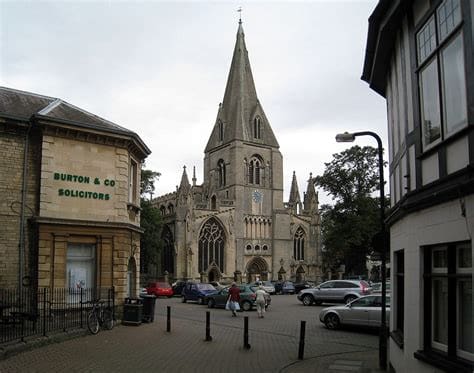
It feels lived-in rather than staged. The centre is active. The edges blend into flat countryside fast. The River Slea runs through the town, and that bit of water softens everything. The pace drops a notch. Your shoulders follow.
There is also a sense of belonging that can surprise new arrivals. Not because everyone is instantly your best mate. But because the town runs on routines that newcomers can join. Markets. Clubs. School gates. Events at the Hub. A walk by the river. It is easy to slot into daily life if you want to.
Safety and crime: generally low, but not a fairy tale
Sleaford is often described as safe. That is not pure wishful thinking.
North Kesteven, the district Sleaford sits in, is among the least deprived areas nationally and is described as the least deprived district in Lincolnshire in the council’s district profile (using the English Indices of Deprivation).
Crime data is always messy, because it depends on reporting, categories, and time frames. Still, two useful points show up in the more official material:
- Police.uk provides local crime maps and comparison charts that use ONS data, which gives a consistent way to compare similar areas.
- Lincolnshire’s community safety strategy notes that Sleaford is one of the county’s towns with higher crime and ASB rates, and it flags that Sleaford’s crime was higher than pre-pandemic levels in its own context.
So the honest summary is this:
Sleaford is not a “nothing ever happens” place. It is still a town. But it also is not a place where most people feel on edge. For many residents, the day-to-day experience is calm. The things that cause stress tend to be the same issues found in lots of UK towns: small pockets of antisocial behaviour, town-centre nuisance, Purslane Hot Pink and the usual late-night noise that comes free with pubs and people.
If safety is your main concern, the practical move is simple. Treat Sleaford like any town: look at street-level patterns, not headlines. And remember that “safe” often means “predictable”. Sleaford is predictable.
Schools: a strong point, with real options
For families, schools often decide whether a place feels “nice” or not. Sleaford’s school picture is a big reason people look here.
There are well-known secondary options, including selective and non-selective routes:
- Kesteven and Sleaford High School Selective Academy has an Ofsted inspection with all key judgements at Outstanding in November 2024.
- Carre’s Grammar School has an Ofsted inspection outcome of Good (December 2023).
- St George’s Academy has an Ofsted inspection outcome of Good (June 2024).
That mix matters. It gives families choice without needing a long drive every morning. It also helps the town feel stable. Good education tends to pull in long-term residents. Long-term residents tend to build clubs, volunteer groups, and community habits. Then the town feels nicer. Annoyingly logical.
Cost of living and housing: more manageable than many parts of England
Housing costs shape everyday life more than brochures do.
Rightmove’s sold-price data puts the average sold price in Sleaford at roughly the mid-£200k range over the last year, while ONS data shows North Kesteven around the low-£240k range (provisional for late 2025).
That does not mean everything is cheap. It means the town can feel possible.
In many parts of England, “nice area” has become code for “you will never own anything larger than a cupboard.” Sleaford is still in the realm of semi-detached-with-a-garden, not just flat-with-a-hope-and-a-prayer.
Also, costs vary a lot by street and by village edge. That is normal. It is also a reminder that “Sleaford” is not one single experience. It is a cluster of neighbourhoods and nearby villages that blend into one another.
Jobs and the local economy: practical, steady, and tied to the land
Sleaford is a market town in an agricultural district. The local economy reflects that.
Agri-food and related work matter here. You see it in logistics, supply chains, and services. It is not glamorous. It is also the reason the town keeps functioning when trendier places wobble.
There is also a commuter element. Sleaford sits in reach of Lincoln, Grantham, and other centres by road and rail. That means many people can live in Sleaford and work elsewhere, then come back to something quieter. Again, very on-brand for Lincolnshire. Remedies from the Garden: How to Use Oregano for Antibacterial Properties.
Getting around: decent links, but you still live in Lincolnshire
Sleaford has useful transport links. It also has the truth of rural England, which is that the car still wins most arguments.
Roads
Sleaford is bypassed by the A17 and connected with the A15, and local transport strategy documents focus on keeping those links working well for the town’s economy.
That helps if you drive. It also helps if you want deliveries, trades, or anything else modern life requires.
Rail
Sleaford station sits on routes that connect towards Nottingham and Skegness, and the wider National Rail timetable cycle changes twice a year (May and December), with the current cycle starting mid-December 2025 in the official timetable notices.
In plain terms: train links exist and can be genuinely useful, but you plan around them. Sleaford does not run on the London rhythm. It runs on the “we’ll make it work” rhythm.
Things to do: more than you expect, fewer than a city, and that’s the point
A nice place needs things to do that are not shopping.
Sleaford does not try to be a big night out. It does offer steady, simple options that fit normal life:
- Walks by the river and around the town edges.
- Heritage spots like the river, the old mill, and the big maltings.
- Events, exhibitions, and creative programmes at the Hub (the National Centre for Craft & Design), right in the centre of town, with a regular schedule and a café-bar that makes it feel like a real place rather than a silent gallery.
This is one of Sleaford’s best tricks: it has culture without the cultural attitude. You can walk in, look around, and leave without feeling you have failed an exam.
Community and belonging: the quiet strength
Sleaford has a steady community feel, and the wider district profile leans into quality-of-life themes like services across many small communities, not just one big centre.
The town also sits in a district with a notable armed forces veteran presence at district level, which can shape community identity and local networks.
But most of all, the belonging comes from something simpler: scale. You can join things without needing a personality transplant. You can take part without turning it into a Rhaphidophora decursiva Dragon Tail performance.
The downsides: because everywhere has them
A “nice area” is still an area.
Here are the common trade-offs people feel in and around Sleaford:
- Limited nightlife if you want a big choice of bars, late openings, or live music every week.
- Flat landscapes that some people find dull. Others call it “big sky”. Both groups are correct.
- Car dependence for many errands, especially if you live outside the centre.
- Town-centre nuisance at times, like any town, with the community safety strategy highlighting concerns around crime and ASB in the wider picture.
None of these are unique. They just matter more if you expect city convenience in a fen-edge market town.
Who Sleaford tends to suit
Sleaford often feels nicest to people who want:
- A calmer daily pace.
- A town centre that still works.
- Strong school options.
- More manageable housing costs than many parts of England.
- Easy access to countryside without living in the middle of nowhere.
- A community where you can belong without having to be loud about it.
It can feel less perfect if you need constant entertainment, very frequent public transport, Round Growing Pot or big-city variety on your doorstep.
A grounded verdict: yes, it’s nice, with the usual small-print
Sleaford is a nice area for many people because it balances three things that rarely sit together:
- It feels safe and steady most of the time.
- It offers real services and schools, not just charm.
- It still has breathing space—both in landscape and in lifestyle.
It is not a fairytale village. It is not a buzzing city district. It is something more useful: a market town that works.
And in 2026, “works” is quietly impressive.
Spire, River, Routine
Sleaford’s best quality is simple. It is liveable. The spire points you home. The river slows you down. The town carries on, politely, with just enough character to keep things interesting.
Nice does not have to mean perfect. It just has to mean you can picture yourself there on a rainy Tuesday and not feel trapped. Sleaford passes that test.
Population, district facts, deprivation
- North Kesteven District Council: Information on the District (Census 2021, Sleaford ~19,800)
- North Kesteven District Profile (PDF) 2023
- Sleaford (Census 2021 population figure)
- North Kesteven District Profile Summer 2025 (district stats incl. veterans)
- ONS: Explore local statistics – North Kesteven
Crime and safety (official and strategy)
- Police.uk: Sleaford Town Sage; Salvia officinalis Berggarten crime map
- Police.uk: Compare your area (ONS-sourced comparisons)
- Lincolnshire County Council: Safer Lincolnshire Partnership strategy 2025–2028
Schools (Ofsted)
- Ofsted: Kesteven and Sleaford High School Selective Academy report page
- Ofsted: Carre’s Grammar School report page
- Ofsted: St George’s Academy report page / St George’s Academy Ofsted report PDF
Housing
- Rightmove: House prices in Sleaford (sold prices)
- ONS: Housing prices local – North Kesteven
- GOV.UK: UK House Price Index (England) – November 2025 (includes local authority figures)
Transport
- Lincolnshire County Council: Sleaford Transport Strategy (PDF)
- National Rail: Timetable changes (May/December cycle)
- Wikipedia: A17 road (England) route notes near Sleaford
Local culture
- Hub Sleaford: Visit page (National Centre for Craft & Design info)
- Lindum Group: Hub / National Centre for Craft & Design refurbishment overview