If you know Spalding at all, you probably know it for flowers. Not as a vague idea. As an actual working place where bulbs, fields, labour, lorries, and timing all line up.
But that is only half the story. The town is also a proper Fenland market centre. It sits on the edge of reclaimed land that has fed the country for generations. It has a river that helped trade long before the sat-nav was born. And it has a surprising streak of culture for somewhere best known for soil. (Yes, we can be both.)
So what is Spalding famous for?
Mainly these five things:
- Tulips and bulb growing
- The Spalding Flower Parade and the wider “Tulip Time” identity
- Big agriculture and food processing in the South Holland Fens
- Historic sites like Ayscoughfee Hall Museum and Gardens
- A quietly impressive learned society: Spalding Gentlemen’s Society
Let’s walk through each one, in plain English, without pretending we’re in a tourism advert.
What Is Spalding, England Famous For?
A town built on bulbs, not buzzwords
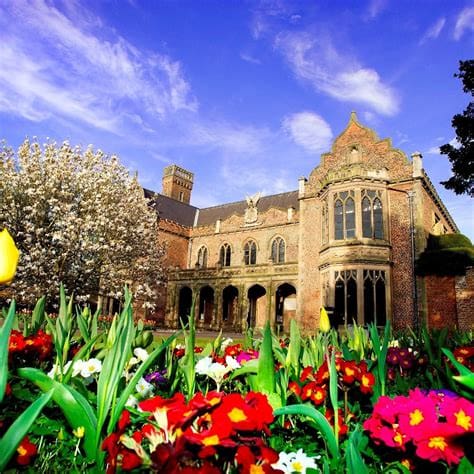
Spalding sits in a part of Lincolnshire where the land is rich, flat, and serious about growing things. The surrounding area is drained and managed Fenland, with deep silty soil that suits large-scale crops and horticulture. That combination is not just “nice countryside”. It is a production engine.
For decades, Spalding was strongly tied to the British bulb industry, especially tulips and daffodils. The story is part local enterprise, part geography, and part sheer stubbornness. Once growers realised what the soils and seasons could do, the area became a major centre for bulb cultivation.
And because we are who we are, the flower fame didn’t stay politely in the fields.
It spilled into the streets.
Why Spalding and tulips became inseparable
Tulips are not native to Britain, but that never stopped us. The Spalding area became known for commercial tulip growing in the late 19th and early 20th centuries, helped by local growers bringing in and expanding bulb stock. By the interwar years, spring in and around Spalding could look like a painted stripe across the landscape.
That visual impact mattered. People travelled to see it. Not for a “content moment”. Just to stand near a field and think, “Right. That’s a lot of colour.”
In other words, Spalding’s tulip fame is not a marketing trick. It started as a real, physical, seasonal spectacle tied to working farms and skilled growing.
And then it became an event.
The Spalding Flower Parade: community spectacle with real roots
The Spalding Flower Parade is the headline name most people remember. Floats covered in flowers. Streets lined with families. A town going all-in on the one thing it grows better than small talk.
The parade has a long local history and grew out of the area’s “Tulip Time” popularity, when visitors came to see the spring bulb fields and the town leaned into the moment. It became nationally known, and for a period it was a defining part of Spalding’s identity.
It also tells us something important about the place.
Spalding does not do “a little festival” very well. It does “we have committed to this now” extremely well.
There is a practical side too. Parades like this are not cheap. They need organisation, volunteers, and sponsors. In other words, they reflect a community that can coordinate, not just celebrate. The event’s ongoing life today is tied to that same local effort.
The Fens effect: food, logistics, and the work behind the view
If the flower story is the postcard, the food story is the supply chain.
Spalding sits in a district known for major vegetable cultivation and packing. The area produces and handles large volumes of crops that end up in supermarkets around the UK. That includes familiar staples and greens grown at scale across the surrounding Fenland.
This is why Spalding often shows up in conversations about UK food and farming. Not because it is flashy. Because it is useful.
Zoom out a little, and the wider Boston–Spalding area is described as a highly concentrated agri-food and logistics cluster, with a large workforce across production, processing, and distribution.
That matters for reputation. It makes Spalding “famous” in a different way.
Not “famous” as in postcards and souvenirs.
More “famous” as in, “We quietly help feed the country, and the shelves look odd when that system hiccups.”
It is also why the town has a practical, working feel. Even on a calm day, there is a sense that something is being moved, washed, packed, stored, or sent somewhere else.
River Welland: the original transport link
A town that grows and trades needs routes. Before motorways and roundabouts, water mattered.
Spalding is on the River Welland, a lowland river that runs across the region to The Wash. It has long been part of the local landscape and a natural corridor through the Fens.
Historically, Spalding’s position on the river helped it operate as a market and trading town, moving goods in and out of a rich agricultural district. Even later descriptions of the town highlight its trade links by river and rail and its role as a local centre.
Today, the river is also part of what makes the town pleasant to walk around. It gives Spalding a sense of shape. Water does that. It quietly tells you where the place begins and ends.
And it is one of those features locals stop noticing until someone visits and says, “This bit is actually lovely.”
They are right.
We just try not to look too impressed.
Ayscoughfee Hall: a proper old building with proper gardens
Every market town needs at least one landmark that says, “Yes, we have been here a while.”
For Spalding, that is Ayscoughfee Hall Museum and Gardens.
It is a historic hall and museum set in large public gardens in the centre of town. The gardens are open daily (with the obvious Christmas Day exception), and the site is presented as a key window into Spalding’s local past.
The gardens themselves are part of what people remember. They are spacious, well-kept, and designed for slow wandering rather than rushing. In other words, they are perfect for anyone who has ever tried to “just pop out for ten minutes” and returned two hours later with a coffee and mild sunburn.
There is also a deeper layer here, because the gardens include one of Spalding’s most significant memorial features.
The Lutyens war memorial: understated, and that is the point
In the grounds at Ayscoughfee, you will find the Spalding War Memorial, designed by Edwin Lutyens. It is a First World War memorial and it has Grade I listed status.
If you know Lutyens’ memorial work, you know the style. Clean lines. Classical restraint. A refusal to over-decorate grief.
It fits the local tone, frankly.
Spalding is not a place that shouts about sacrifice. It marks it. It maintains it. It leaves space around it.
The council has also treated it as a serious heritage asset, including recent restoration work to keep it in good condition.
That maintenance tells you something. The town values memory, but it does it in a practical way. We fix the stonework. We keep the place open. We don’t overdo the speech.
The Spalding Gentlemen’s Society: culture hiding in plain sight
Now for the bit that surprises people.
Spalding has a learned society founded in 1710. It describes itself as Britain’s oldest surviving provincial learned society. It has collections, a museum presence, and a long-running mission tied to the arts, sciences, and humanities.
That is not what most people expect from a town associated with tulip fields and vegetable packing lines.
But most places are more than their stereotypes. Spalding is a good example.
It also adds texture to the town’s reputation. Spalding is not only a place that grows. It is a place that keeps records, shares knowledge, and takes local history seriously.
And yes, the name still sounds like a club where everyone wears tweed and disapproves of modern shoes. But membership is open, and the point is the work, not the vibe.
Springfields Festival Gardens: the “nice day out” option with real skill behind it
If Ayscoughfee is the historic heart, Springfields Festival Gardens is the modern, curated side of Spalding’s garden identity.
These are large public gardens designed to be explored, with themed areas and show-garden elements. They are run and managed by a horticultural society set up as a charity, focused on planting, maintenance, and development.
This matters because it is not just “some flowers near a shopping centre”. It is a living display of horticultural planning and upkeep. It is also a reminder that Spalding’s plant link is not only history. It continues in modern public spaces too.
And it gives the town another kind of fame.
Not “we used to do tulips.”
More “we still know how to grow things well, and we are happy to show you.”
So, what is Spalding famous for, in one line?
Spalding is famous for being a Fenland market town where horticulture became identity.
That shows up in tulip growing, the Flower Parade tradition, and the gardens people visit.
It shows up in the scale of local food production and processing.
And it shows up in the town’s heritage: Ayscoughfee, the Lutyens memorial, and a learned society older than most of our buildings.
In other words, Spalding’s fame is not one thing.
It is a bundle of practical success, seasonal beauty, and quiet pride.
Which is very Spalding, when you think about it. If you are planning a visit, the Visit Lincolnshire Spalding guide is useful for current local attractions and visitor information.
A last word from the Fens
If you come looking for Spalding’s “big thing”, you will find it in flowers.
But if you stay long enough to notice the patterns, you will see the deeper fame. The work. The land. The systems. The way a town can be shaped by what it grows, and still make room for gardens, history, and culture.
It is not a loud place.
It does not need to be.
It just keeps doing the job.
Spalding’s flower-growing heritage is a large part of its identity, so readers interested in that side of the town may also enjoy Wright Gardens for more plant and garden content.