Woodhall Spa has a way of feeling like a small town that accidentally learned how to be a resort, then decided not to make a fuss about it.
It sits in the middle of Lincolnshire, wrapped in pinewoods and quiet confidence. It has neat avenues, gardens that try their best, and an air of “we’ve seen visitors before, it’s fine.” It is not loud. It is not flashy. It is, in other words, exactly why many of us end up liking it.
On the surface, Woodhall Spa is simple: a village centre with independent shops, a famous old cinema in the trees, and enough fresh air to make your shoulders drop. Under that, it has a surprisingly layered backstory. A spa town built on a mining mistake. A wartime base for serious people doing serious things. A destination that keeps sneaking into top lists while pretending it is all very normal.
If you want a Lincolnshire break that feels restful, but not dull, this is one of the safest bets we have. For current trip ideas across the area, the Visit Lincolnshire Heart of Lincolnshire guide is a useful official starting point.
The “Spa” Part Was an Accident, Like Many British Successes
Woodhall Spa exists because someone tried to find coal and failed in a useful way.
In 1811, digging for coal led to the discovery of mineral-rich spring water. Later analysis found the water contained iodine and bromine, and the place grew into a spa resort in the 19th century, with baths and hotels built to serve visitors who came to “take the waters.”
This is the first thing Woodhall Spa does well: it turns a practical mishap into a whole identity, then keeps the tone calm about it.
The spa era shaped the village’s look. Tree-lined roads, a sense of space, and the kind of gentility that does not need a sign explaining itself. Even today, you can feel that the place was planned to be walked at a slow pace, by people who had time, hats, and opinions about the correct temperature of bath water.
The original Spa Baths eventually closed after the well collapsed, but the story never left.
Why It Feels Different: The Woods Do Half the Work
Woodhall Spa is not just “near” woodland. It is built into it.
The pinewoods soften the edges of the village. They also change the sound. Even when the centre is busy, the trees take the sharpness off things. That is why a stroll here feels like a break, even if you have only parked five minutes ago.
This matters if you are the sort of person who wants a proper walk without planning a proper walk. You can step out, breathe in, and let the place guide you. Instead of chasing landmarks, you can just follow the shade.
And in spring and early summer, the village leans into colour. Gardens and planting make the centre feel cared for, in a quiet way that suggests someone is always tidying, and nobody is taking credit for it.
The Kinema in the Woods: Old-School, In the Best Possible Way
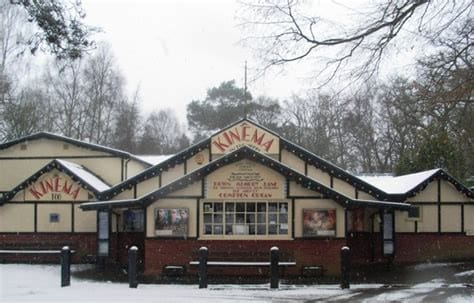
If Woodhall Spa had to pick one “signature” attraction, the Kinema in the Woods would win without needing a vote.
It began life as a pavilion linked to the old Victoria Hotel grounds, and it became a cinema in 1922. That alone would be enough. But it also holds onto the kind of cinema experience most places have polished away.
The Kinema is known for its back projection setup, which is now a rare working feature in the UK. It also leans into tradition with the sort of confidence you only get after a century of people saying, “Please don’t change it.”
This is not a multiplex evening where you forget the film the moment you leave. This is a small ritual. You arrive through trees, you settle in, you enjoy the fact that the building has character, and you walk out feeling like you have done something slightly more human than scrolling.
But most of all, it fits the village. Woodhall Spa does charm best when it is not trying too hard. The Kinema understands that perfectly. Our broader Woodhall Spa guide pulls together more of the village’s slow-day attractions.
Jubilee Park: The Heated Outdoor Pool That Feels Like a Treat
There are two kinds of outdoor pools in Britain.
One kind is a brave idea that turns into a cold lesson. The other kind is Jubilee Park.
Jubilee Park has a 33-metre outdoor pool that is heated, and it runs its main season from spring through autumn. The park itself is more than just water: it has a broad, open feel, plus a mix of facilities that make it easy to build a full day around a swim.
For families, it is the kind of place where children burn off energy and adults pretend they are there “for the fresh air.” For everyone else, it is a simple pleasure: a warm swim outdoors in Lincolnshire, followed by the quiet smugness of knowing you picked the right day.
After more than a few British summers, we all learn this truth: when the weather behaves, you take the gift and do not ask for explanations.
Golf That People Travel For (Even If You Don’t)
Woodhall Spa is a golf destination. That sentence will matter a lot to some people and not at all to others. Both are fine.
Golf arrived here in the late 1800s, and the club was instituted in 1891. The Hotchkin Course opened in 1905 and later gained its character through redesign work associated with Stafford Vere Hotchkin.
Today, the site is also known as the National Golf Centre, reflecting its role as a national headquarters and training hub.
Even if you never touch a golf club, the “golf village” feel still shapes Woodhall Spa. It helps explain the tidy look, the steady stream of weekend visitors, and the way the place supports good food and comfortable stays without turning into a noisy resort.
In other words, golf quietly underwrites the village’s calm. Like many things here, it works without showing off.
The Dambusters Story: Quiet Streets, Heavy History
Woodhall Spa’s most serious chapter is tied to the Second World War.
The area had strong RAF links, including an airfield built near the village, and the village’s major hotels were requisitioned for RAF use. That wider aviation story also connects naturally with RAF Cranwell history elsewhere in Lincolnshire. The Petwood Hotel, in particular, is closely connected with 617 Squadron, the “Dambusters,” and is widely described as their wartime home as an officers’ mess.
This is not “history as a theme.” It is history sitting right there, under the surface of a place that now feels gentle.
One of the striking things about Woodhall Spa is how naturally it holds that contrast. You can spend a morning in a peaceful park, then remember you are walking in a village that once carried the pressure of wartime operations and loss. There is a memorial in the village connected to Operation Chastise and the squadron’s story.
The village does not dramatise it. It does not need to. The story is powerful enough on its own.
The Cottage Museum: The Best Kind of Small Museum
If you like local places that keep their memories in drawers and photo albums, the Woodhall Spa Cottage Museum is worth your time.
The museum focuses on the village’s social history and includes the story of the Wield family who lived there from the late 1800s into the 20th century. It is also a rare surviving example of a corrugated iron bungalow built on a wooden frame, with a strong photographic record of village life.
This is the kind of museum that does not try to impress you with size. It wins by detail. It gives you context for what you are seeing outside: why the village grew, how it lived, and what the “spa” period looked like on ordinary days.
It also sits alongside visitor information services, which is convenient in the most practical way possible.
Walking, Cycling, and Running: The Spa Trail and Easy Miles
Woodhall Spa is friendly to people who like moving through places rather than just looking at them.
A standout option is the Spa Trail, a flat, surfaced route that follows part of the old Horncastle to Woodhall Junction railway line and links into the story of the Horncastle Canal. It is set up for walking, cycling, and riding, and its easy surface makes it feel approachable rather than ambitious.
If you run, Woodhall Spa makes it easy to stack up calm miles:
- Short, steady runs in the woods: Pine-scented air, soft edges, and routes you can adjust on the fly.
- A simple out-and-back on the Spa Trail: Flat, predictable, and good when you want rhythm instead of hills.
- A “wander run” around the village avenues: The kind where you slow down, look around, and pretend you planned it.
The best part is the tone. These are not routes that demand performance. They invite consistency. You can move, breathe, and come back feeling better than when you started. That is the whole point.
The Village Centre: Independent Shops and Small-Scale Enjoyment
Woodhall Spa’s centre is compact, walkable, and pleasantly self-contained.
It does not feel like a place built for chains. It feels like a place that kept its local shops because people still use them. It is the sort of village where you can pick up food, browse, stop for coffee, and never once have to cross a massive car park that makes you question your life choices.
This matters if you are planning a short break. You can park up, settle in, and spend a full day without driving anywhere. That is a rare thing now, and Woodhall Spa offers it without making a song and dance about it.
Where to Stay: Comfortable, Historic, and Not Too Showy
Woodhall Spa does accommodation in a way that matches the village.
If you want heritage and a sense of story, the Petwood Hotel is the most famous name, with its Edwardian origins and wartime role woven into how people talk about it.
The wider village also supports hotels and places to stay that suit different budgets and moods, which is part of why it works as a weekend base. You can make it a romantic break, a family stay, or a quiet solo reset. The village does not judge. It just provides.
When to Go: The Good Months and the Honest Months
Woodhall Spa is pleasant year-round, but it has clear “sweet spots.”
- Spring to early autumn: This is peak Woodhall Spa. Gardens, longer evenings, and Jubilee Park’s outdoor pool season make the village feel like it is doing what it was built to do.
- High summer: Busy, cheerful, and sometimes surprisingly lively for a village that usually behaves.
- Autumn: Crisp walks, calmer streets, and the kind of light that makes the woods look like they are showing off.
- Winter: Quiet, slow, and a little moody in a good way. If you like empty paths and cosy interiors, it works.
In other words, it depends on what we want. Woodhall Spa can do “treat” and it can do “peace.” We just pick the version that suits us.
A Weekend That Feels Like It Lasted Longer
Woodhall Spa is not a place that overwhelms you with attractions. It does something better.
It gives you enough to do, then gives you space to do it without rushing. You can watch a film in the woods, swim outdoors in warm water, walk or run along a traffic-free trail, and absorb a serious slice of RAF history without feeling like you have been put on a timetable. If you want to extend the history theme nearby, Tattershall Castle makes an easy companion stop.
That balance is rare. Many places either pack the day too tight or leave you stranded with nothing but a gift shop. Woodhall Spa sits neatly in the middle. Calm, but not empty. Historic, but not dusty. Polite, but not boring.
A Quiet Exit Through the Pines
When we leave Woodhall Spa, we usually feel like we have had a proper break, even if it was only a night or two. That is the village’s best trick.
It does not demand attention. It earns it.
We come for the woods, the Kinema, the pool, the walks, the golf, or the history. We stay for the feeling: a steady, pine-scented calm that follows us back to the car.
And then, very politely, Woodhall Spa lets us go.
If Woodhall Spa’s pinewoods, walking routes and slower outdoor pace appeal to you, Noah’s Outdoors has more ideas for simple days outside and countryside exploring.