Tulip bulbs look unimpressive. They are dry. They are papery. They are shaped like an onion that has been to a bad meeting. Then spring arrives, and they do what they do best.
In the UK, tulip bulbs are one of the simplest ways to get big colour with very little fuss. We plant them when the garden is winding down. We forget about them for months. Then they show up, as if they were always the plan.
Tulips also fit our climate well. They like a cold spell. They like a proper winter. They like a spring that is bright but not too hot. In other words, they are comfortable here, and it shows.
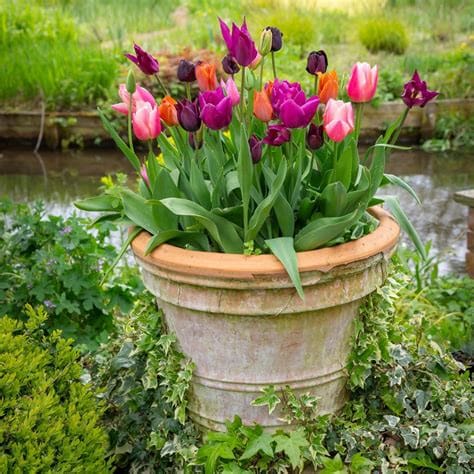
What a Tulip Bulb Really Is
A tulip bulb is a storage unit. It holds food and water inside tight layers. That stored energy is what pays for the spring display.
When we plant a bulb, we are not planting a “seed” that will decide what it wants to be later. We are planting a finished promise. The flower is already formed inside, just waiting for time and temperature to do their bit.
That is why bulb quality matters. A bigger, firm bulb usually means a stronger stem and a better bloom. A soft bulb, or one that feels light and dried out, is already losing the argument.
Choosing Bulbs That Actually Perform
Tulips come in many types. Some are bred for a one-season show. Some are more willing to return. If we want repeat performance, we pick varieties that behave like perennials. If we want a perfect show for one spring, we treat them like annuals and move on without guilt.
A practical rule is simple:
- For reliable return: species tulips and some groups like Darwin hybrids tend to do better over time.
- For high-impact bedding: many modern bedding tulips are best treated as “plant once, enjoy fully, replace next year.”
This is not a moral issue. It is a planning issue.
When to Plant Tulip Bulbs in the UK
Tulips are spring-flowering bulbs, and autumn is their planting season. The classic window is roughly September to November. In many gardens, November is a sweet spot because the soil has cooled, and tulips prefer that. Cooler soil can also help reduce disease problems.
Late planting can still work. In milder parts of the UK, even planting in December can still give a good display, as long as the ground is not frozen solid or waterlogged. We just accept that later planting can mean a shorter season of flowers.
The key idea is simple. Tulips need time in cold soil to trigger flowering. They do not need drama. They need weeks of winter. For current planting and care guidance, the Royal Horticultural Society tulip guide is a useful reference.
Where Tulips Grow Best
Tulips like:
- Full sun in spring
- Free-draining soil
- Shelter from strong winds, if possible
Heavy clay can still work. It just needs help. Tulips dislike sitting wet for long periods. If soil stays soggy in winter, bulbs can rot. Adding grit, improving drainage, or using raised beds and pots makes a big difference.
This is where we quietly admit something. Tulips love a “neat” garden. They do not like chaos at their feet.
Planting Tulip Bulbs in the Ground
Tulips look best when we plant them in groups. A single tulip can look like it got lost. A cluster looks intentional.
Depth and spacing
A reliable planting rule is to plant the bulb two to three times its own height deep. For many tulips, that often lands around 10–15 cm deep, and sometimes deeper in colder spots. Spacing is usually at least twice the bulb’s width, with a bit more room if we want them to bulk up over time.
We place the bulb with the pointed end up. Then we backfill and firm gently.
That is it. No soaking needed. No complicated rituals. Tulips are not impressed by overcare.
Grouping for impact
Tulips shine when planted in drifts. We can tuck them into borders so spring has a clear moment, before summer perennials take over. We can also thread them through shrubs and grasses to give a more natural feel.
Both work. The difference is mood.
Planting Tulip Bulbs in Pots
Pots are where tulips feel almost unfairly easy. They are also where we get control.
- We control the soil mix.
- We control the drainage.
- We can move the pot into the best light.
- We can lift it away from soggy ground.
A good pot for tulips has drainage holes and enough depth for roots and compost. We use a free-draining compost, often improved with grit. We plant bulbs close together for a full look, but not touching.
Then we water once to settle the compost. After that, we keep watering light through winter. Wet compost plus cold weather is how rot begins.
Pots also make protection easier. If squirrels treat tulip bulbs like takeaway, a simple wire mesh cover over the pot can save the whole display.
The “Lasagne” Method for Longer Bloom
If we want one pot to flower for weeks, we can layer bulbs by flowering time. This is often called a bulb “lasagne”.
The idea is simple:
- Later bulbs go deeper.
- Earlier bulbs sit above them.
- Each layer gets compost between.
We can mix tulips with daffodils, crocus, hyacinths, or iris reticulata. The pot then blooms in stages.
It is an efficient trick. It is also a polite way to make a small space feel like it has ambition.
Watering and Feeding Without Overdoing It
Tulips are not heavy feeders, but they do appreciate basic support.
- Water: After planting, one good watering settles the compost or soil. After that, tulips usually cope on winter rain unless conditions are unusually dry.
- Feed: A general bulb feed can help, especially in pots. Feeding is most useful when leaves are growing and the bulb is rebuilding its energy.
The aim is steady growth, not lush, soft leaves. Soft growth invites trouble.
After Flowering: The Bit That Decides Next Year
Tulips are at their best in flower. Then they look messy. This is where we stay calm.
Once the flowers fade:
- Remove the spent flower heads. This stops seed formation and keeps energy in the bulb.
- Leave the leaves alone. The leaves feed the bulb for next year. We let them yellow and die back naturally.
- Water lightly if needed. Especially in pots, we avoid drying the bulb out too fast.
- Move pots out of the spotlight once they stop looking their best, but keep them somewhere bright while the leaves are still green.
This aftercare is why some tulips return well and others sulk. The bulb needs time to recharge. We give it that time.
Lifting and Storing Tulip Bulbs
Some gardeners lift tulips each year, especially bedding tulips, because it can reduce disease build-up and makes border space easier to manage.
If we lift bulbs:
- We wait until foliage has fully died back.
- We lift carefully and let bulbs dry.
- We store them somewhere cool, dry, and airy, out of direct sun.
- We replant in autumn.
This is also useful in heavy soils that stay wet. Lifting can be the difference between bulbs surviving or quietly dissolving.
Tulip Fire and Other Problems We Prefer to Avoid
Tulips have one famous disease in the UK: tulip fire. It is a fungal disease that can cause brown spots, distortion, and plants that look scorched.
The practical approach is firm:
- Remove infected plants promptly.
- Do not compost infected material.
- Clean tools if needed.
- Avoid planting tulips in the same spot for a period if the problem was severe.
Tulip fire is not a reason to give up on tulips. It is simply a reason to plant well, avoid overcrowding in damp sites, and respect good hygiene.
Squirrels, Foxes, and the Great Bulb Heist
In some gardens, tulips are not lost to weather or rot. They are stolen.
Squirrels are the main suspects. They dig up newly planted areas because the soil has been disturbed and smells interesting. They also seem to enjoy bulbs on principle.
Simple protection works:
- Cover pots with wire mesh until shoots are up.
- Pin mesh or chicken wire over freshly planted areas in borders, then remove later.
- Keep netting taut so wildlife does not get tangled.
It is not glamorous. It is also more glamorous than an empty pot in April.
Designing With Tulips
Tulips can look sharp and modern, or soft and natural. The difference is how we pair them.
- For a clean, bold look: one variety per pot, strong colours, simple shapes.
- For a cottage feel: mix tulips with forget-me-nots, wallflowers, and soft greens.
- For something calmer: use pale tulips with grey foliage plants and white spring flowers.
- For drama: deep purple tulips against fresh lime greens in spring borders.
Tulips also look brilliant in repetition. One pot is nice. Five pots together looks like a plan.
A Lincolnshire Note: Tulips and the Fens
Tulips are not just a garden choice in the UK. They are also part of a local industry story, especially in places like South Holland in Lincolnshire.
Spalding is tied to the bulb world. The wider area has long been known for bulb production, and the town’s identity has been linked to that seasonal colour. Even the old Spalding Flower Parade story reflects how much bulbs once shaped local pride and public celebration.
So when we plant tulip bulbs in a back garden, we are also touching a bigger tradition. That flower-growing heritage is also a large part of what Spalding is famous for. It is quiet. It is practical. It is very British.
A Spring Promise Kept
Tulip bulbs ask for one thing from us. We plant them properly, then we mostly leave them alone.
That is the whole deal.
They sit in cold soil through winter. They wait. Then, on a bright spring day when the garden still looks half-awake, tulips turn up in full colour and pretend this was effortless.
We let them have that moment. They have earned it.
If the practical side of bulbs and seasonal planting interests you, Plant Hoarder is a useful next stop for more plant-focused reading beyond Spalding’s tulip story.