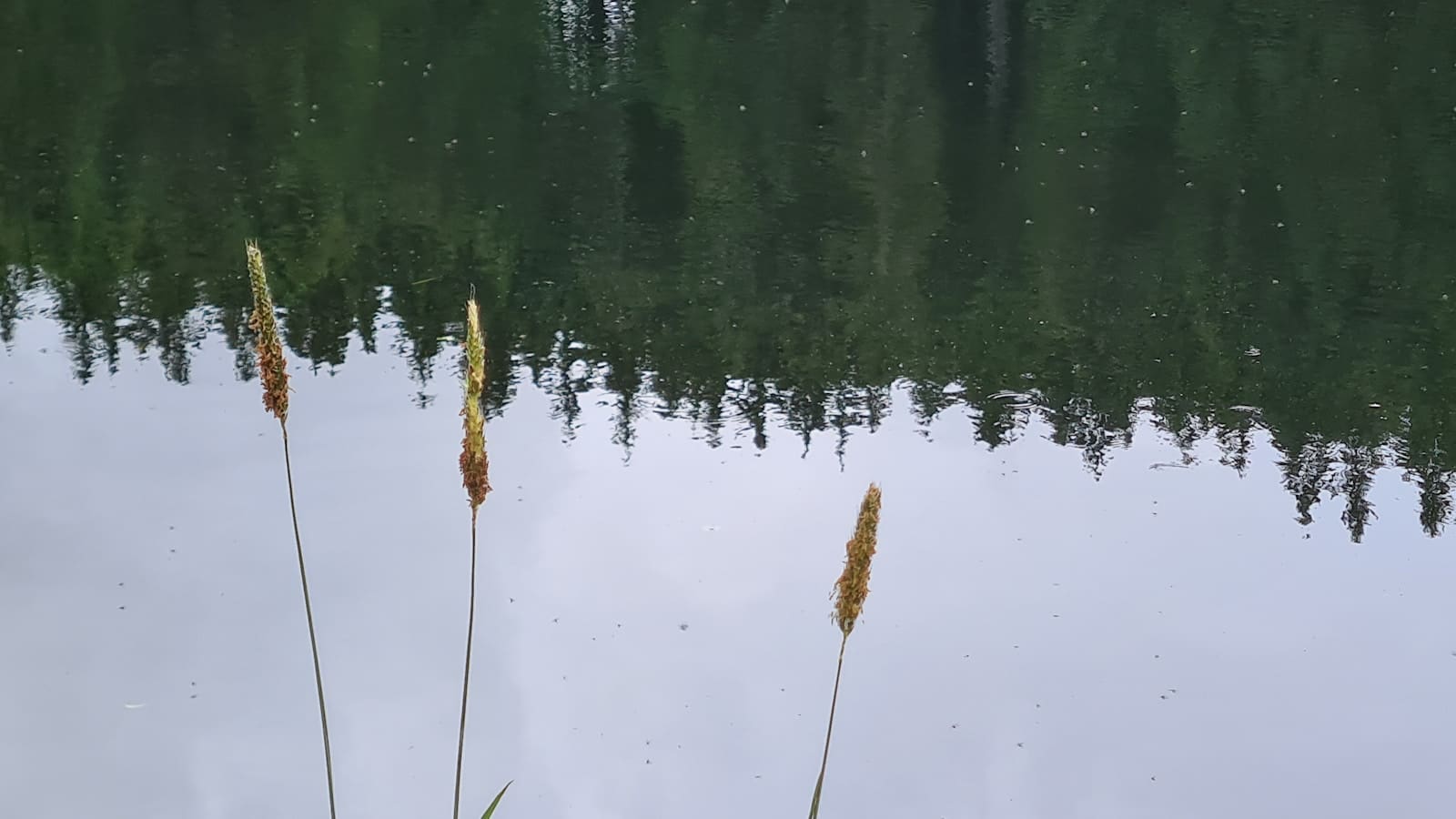
Ashby Ville Nature Reserve sits just off Mortal Ash Hill on the southern edge of Scunthorpe. It looks, at first glance, like a simple lake with some scrubby banks and a few dog walkers. In other words, it hides its best features quite well. Under the surface, both literal and metaphorical, it is one of North Lincolnshire’s most quietly interesting green spaces: a former sand and gravel quarry turned Local Nature Reserve, now packed with wildflowers, birds, insects and a slightly surprising number of fish.
Instead of feeling like a manicured park, Ashby Ville keeps a bit of roughness. The result is a place where we can walk a flat circuit, watch geese squabble on the water, and see rare butterflies along the path, all within sight of a supermarket and a main road. It is very British in that way: practical, accessible, and more special than it admits.
From Sand and Gravel Pit to Local Nature Reserve
Ashby Ville (often called Lakeside) began life as a working quarry, supplying sand and gravel for construction. When extraction stopped, the pit flooded, leaving a deep lake surrounded by sandy spoil mounds and disturbed ground. After more than a few years of benign neglect, nature did what it usually does: it moved in.
North Lincolnshire Council later moved from accidental wildlife to deliberate protection. Ashby Ville was designated as one of the area’s Local Nature Reserves, alongside places like Atkinsons Warren, Brumby Wood and Waters’ Edge. Today, there are 17 Local Nature Reserves across North Lincolnshire, together covering around 310 hectares, which actually puts the area above the national target for LNR provision per head. Ashby Ville is one distinctive piece in that wider network. Our North Lincolnshire Museum guide gives more context on the geology and industry that shaped this landscape.
The 2012 Local Nature Reserve review described the site in characteristically dry council language: a combination of lake, scrub, acid grassland and wetland along Bottesford Beck, with management aimed at preserving important plants of wet and sandy ground and the insects and birds that go with them. In other words, a post-industrial jigsaw that turns out to be ideal for wildlife.
A Mosaic Landscape: Lakes, Wetlands and Sandy Banks
The first thing most of us notice is the water. The central lake, once the quarry void, now reads as a natural-feeling piece of open water with reed fringes and quieter inlets. But most of all, Ashby Ville is about variety packed into a modest footprint.
Open Water and Wetland
The lake and its associated ponds support a classic cast of British freshwater wildlife. The wetlands draw in Canada and Greylag geese, Mallards, Tufted Ducks, Little Grebes, Mute Swans and Reed Buntings. Thirteen species of fish, including Carp, Rudd, Chub and Pike, have been recorded in the waters, along with frogs, toads and a good range of freshwater invertebrates.
Instead of formal reedbeds laid out on a plan, the margins feel slightly ad hoc, shaped by quarry edges, natural colonisation and later management. That patchiness is good news for many species, which like edges, backwaters and shallow bays more than straight lines.
Acid Grassland and Bare Ground
Move away from the water and the old quarry shows itself more clearly. The nutrient-poor, free-draining sandy soils support acid grassland and a distinctive flora. Viper’s Bugloss, Bird’s-foot Trefoil and Smooth Cat’s-ear are among the wildflowers that thrive here, with Foxglove, Evening Primrose, Wild Strawberry, Yarrow and Broom adding colour through the year.
These plants favour conditions that would make many gardeners wince. Thin soil, dry banks and regular disturbance suit them perfectly. The old mounds and hollows left by quarrying create a “mosaic” landscape of bare ground, meadow, scrub and young woodland, all interlocked at short distance. For invertebrates with complicated life cycles, this is ideal. They can nest in open sandy spots, feed on nectar-rich flowers, and retreat into scrub without travelling far.
Woodland and Scrub
Gentler slopes hold areas of scrub and developing woodland. English Oak, Elm, Elder and Birch provide cover, while Hawthorn and other shrubs thicken the understorey. Birds like Tawny and Long-eared Owls, Green Woodpeckers, Robins and Blackbirds all find something to their taste here.
The woodland is not ancient or dramatic; it is workmanlike, still settling into itself. Instead of romantic glades, you get sensible shelterbelts. This is perfectly adequate for most of the species involved, and quietly effective for people who just want a bit of shade on a warm day.
Wildlife Highlights Through the Year
Ashby Ville’s value lies partly in how many species it supports compared with its size. After more than a decade of careful management, the reserve now offers interest in every season.
Birds on the Water and in the Trees
The lake plays host to year-round wildfowl. Swans and geese are the headline acts, but smaller ducks and Little Grebes reward more patient watching. In winter, the water can hold sizable gatherings of birds, turning an ordinary walk into an informal counting exercise.
In the trees and scrub, typical British residents – tits, finches, thrushes – share space with Green Woodpeckers hunting ants on the sandy banks. Tawny and Long-eared Owls make use of the wooded areas and surrounding landscape, although seeing them is, as usual, a matter of luck and timing.
Butterflies, Bats and Small Mammals
In warmer months, the air above the grassland and along sheltered paths fills with butterflies. Up to twenty species have been recorded, including Peacock, Wall, Skippers, Small Copper and the locally rare Grayling, which especially favours dry, open, sandy grassland.
At dusk, Common Pipistrelle and Daubenton’s bats work the air over the water and along treelines, feeding on insects that rise from the lake and rough grassland. Small mammals such as rabbits, squirrels, shrews and water voles add to the mix, though you’re more likely to see the signs of their passing than the animals themselves.
For a site so close to town, the list is respectable. It is not a remote reserve with hides and warden’s cottages; it is simply a former quarry doing a solid impression of a semi-wild landscape.
Walking the Loop: Access, Paths and Facilities
For many of us, Ashby Ville is, first, “that easy walk round the lake”. The main path forms a broad loop of roughly 1.4 miles (about 2.2 km), largely flat, with small variations in surface. It typically takes between half an hour and an hour, depending on how often we stop to look at ducks, check our phones or referee the dog.
A timber walkway added behind the Lakeside retail park allows a complete circuit of the water. It also doubles as a rather good viewing platform, with some of the best vantage points for watching birds and general activity on the lake.
The reserve is:
- Dog friendly, with enough space for dogs to stretch their legs, provided we keep an eye on wildlife and other visitors.
- Accessible, in the practical sense that well-maintained paths allow use by a wide range of people, though surfaces can be variable in very wet weather.
- Easy to reach, sitting just off Mortal Ash Hill (A18) with nearby parking and the Lakeside commercial area close at hand for those who need coffee before or after walking.
In other words, this is not a hike requiring boots, compass and emergency rations. It is a local loop where we can fit nature into an ordinary morning without treating it as an expedition. For current local visitor information, the official Visit North Lincolnshire Scunthorpe guide is a useful reference.
Water Safety: Beautiful but Treacherous
The lake at Ashby Ville looks inviting in hot weather. Clear water, easy access, and a sort-of-beach area have, over the years, tempted people into swimming and paddling. Unfortunately, the site’s quarry origins make the water far more dangerous than it appears.
Cold, deep water, sudden drop-offs and underwater hazards have led to serious incidents, including the tragic death of a 14-year-old boy in 2021. Despite repeated warnings, fines and patrols, people continued to enter the water.
In 2024, North Lincolnshire Council took a more physical approach. More than 100 tonnes of large stones were spread across parts of the “beach” to make access less appealing and less comfortable, part of a broader water-safety push across local nature reserves. Instead of soft sand, would-be swimmers now meet an ankle-testing stony barrier. It is not exactly picturesque, but it is clear in its intent.
The message is simple, even if the tone has to remain politely firm:
- No swimming
- No water sports
- No wading in just because it is a warm day
But most of all, we are asked to treat the lake as a habitat, not a lido. Walk, fish where permitted, watch wildlife, certainly. Just stay out of the water.
Ashby Ville in the Wider North Lincolnshire Nature Network
Ashby Ville does not stand alone. It is part of a network of Local Nature Reserves spread across North Lincolnshire – from the ancient woodland of Brumby Wood to the rabbit-grazed grassland of Atkinsons Warren and the wetland-rich landscape of Waters’ Edge on the Humber bank.
Together, these reserves give local residents access to:
- Woodland and bluebells
- Grasslands and old industrial land turned wildlife havens
- River corridors, ponds and reedbeds
The council’s own figures point out that North Lincolnshire now exceeds the national benchmark for Local Nature Reserve provision per 1,000 people. It is an unflashy statistic, but it matters. After more than a century of heavy industry, mining and large-scale agriculture, the area is deliberately carving out space for non-human residents too. For a more formal green-space contrast nearby, our Normanby Hall Country Park guide covers its parkland, gardens and deer grounds.
Ashby Ville’s role in this network is to provide a lakeside hub in the south of Scunthorpe – somewhere that can absorb weekend dog walkers, after-school circuits, amateur photographers and visiting birders without too much fuss.
Visiting with Care: Small Habits, Big Effect
Because Ashby Ville feels informal, it can be easy to forget that it is a protected site with sensitive habitats. In other words, the way we use it has a direct effect on the very wildlife we come to enjoy.
A few simple habits make a real difference:
- Keeping dogs under control, especially around nesting birds and in summer when young wildlife is everywhere
- Sticking to main paths where possible to avoid trampling fragile wildflower areas on sandy banks
- Taking litter home or using bins, so that plastic does not end up in the lake or in a swan’s stomach
- Respecting any angling rules and designated areas, so fishing and conservation sit alongside each other instead of in opposition
None of this is particularly heroic. It is just everyday courtesy extended to a place that cannot answer back.
Quiet Edges, Lasting Impressions
Ashby Ville Nature Reserve will probably never make a glossy “top ten UK nature escapes” list. It is a re-purposed quarry on the edge of a town best known for steelmaking, with a retail park at one end and a main road at the other.
Yet when we walk the loop, pause on the wooden walkway, and watch a Grey Heron lift off from the reeds, the setting fades and the mood changes. We see butterflies along a dry sandy bank that used to be spoil. We hear bats over water that was once an extraction pit. We share the path with families, anglers and fellow dog walkers, all using the space in their own matter-of-fact ways.
Instead of a grand, remote reserve with hides and admission charges, Ashby Ville offers something more ordinary and, in many ways, more useful: a daily, walkable slice of semi-wildness built out of an industrial past. It rewards repeat visits rather than bucket-list tourism.
If we treat it kindly – keep out of the water, keep to the paths where it counts, keep turning up – it will go on quietly improving, year after year. And that, in a landscape so heavily shaped by human hands, is no small achievement.
If the lakes, paths and wildlife at Ashby Ville appeal to you, Noah’s Outdoors is also worth a look for practical ideas around walking, wildlife and spending more time outside.